
 Tel:+86-575 -87957662
 Email:
 English
 中文简体
中文简体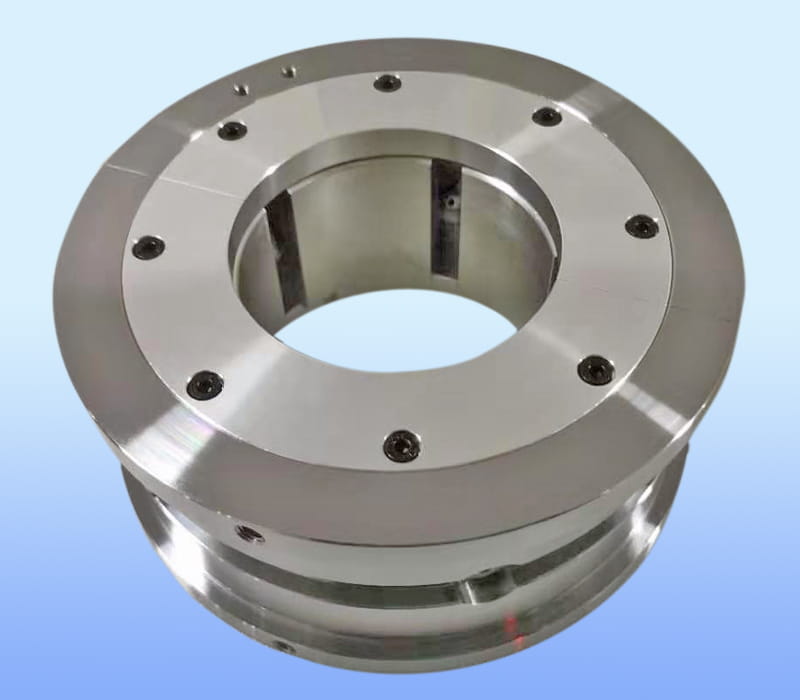
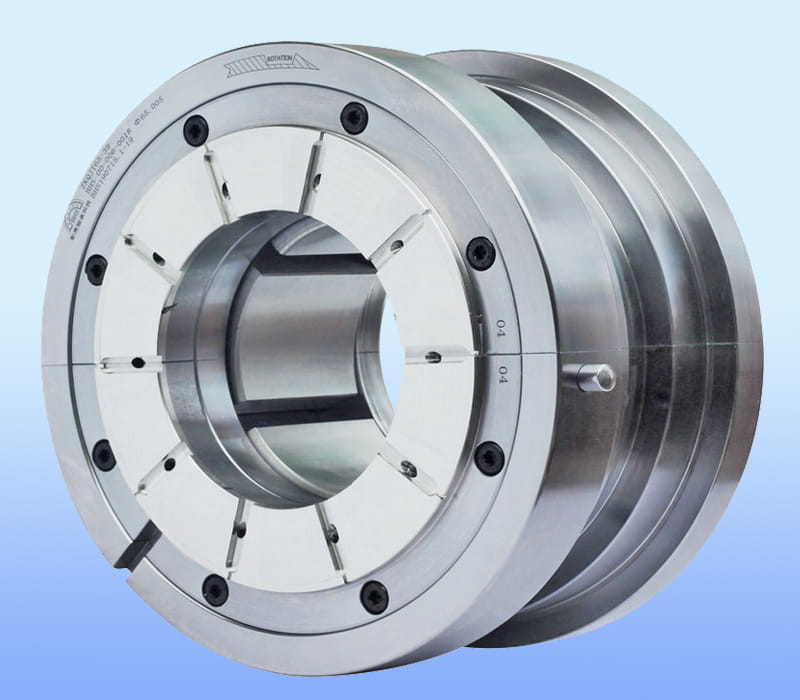
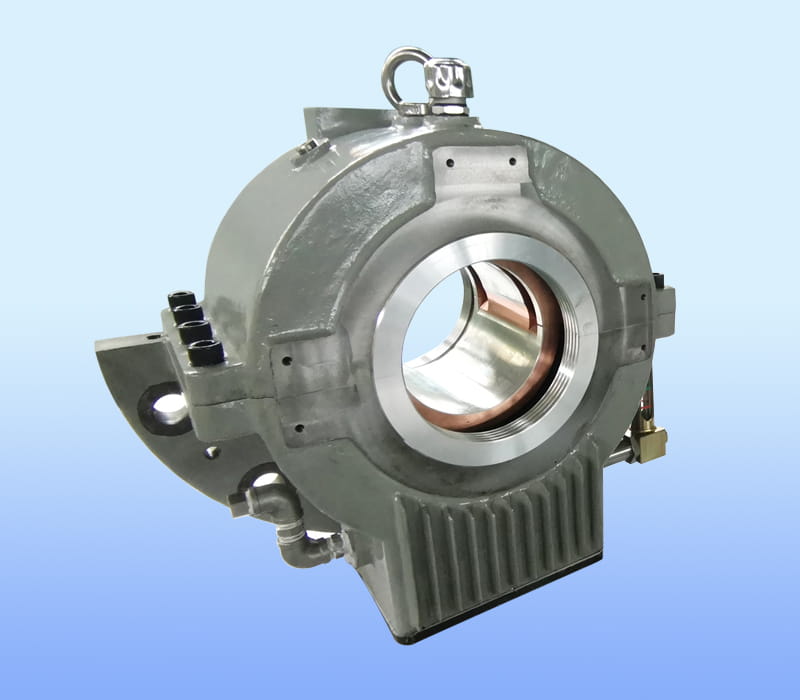
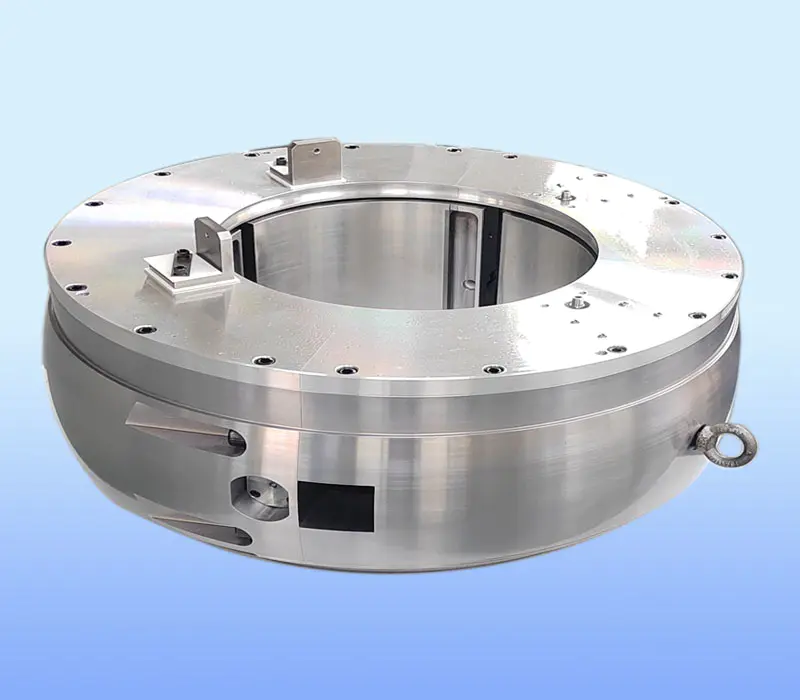
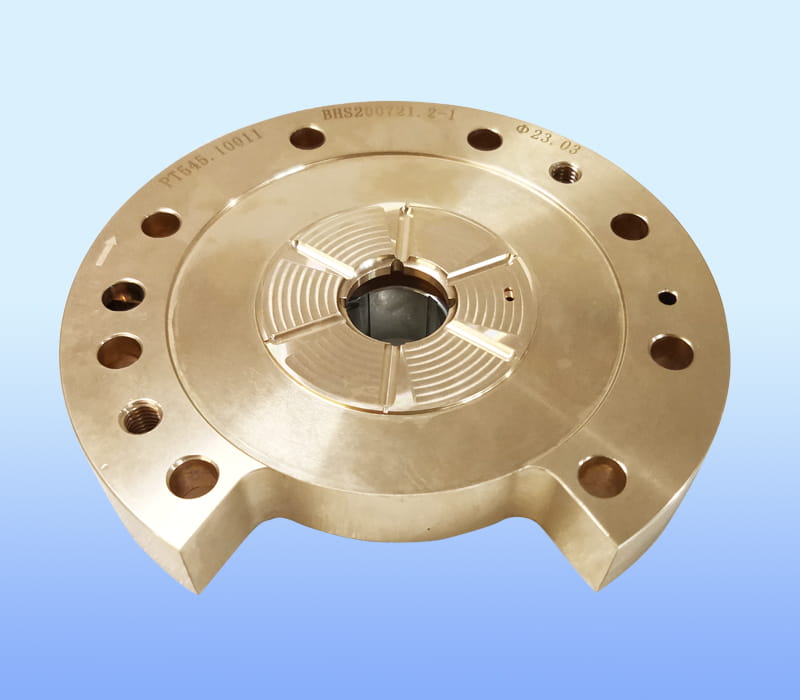
ZHEJIANG BHS JOURNAL BEARING CO.,LTD. located in FengXian District of ZheJiang, the company's brand "BHS", is a professional tilting pad thrust bearings manufacturers and Tilting pad bearings factory...

Direct engineering conclusion: For high-speed rotating equipment (DN values exceeding 1.8×10⁶ mm·r/min), reliable journal bearing design mandates three inseparable principles: fully established hydrodynamic film with oil film thickness h_min ≥ 2.5 μm, rigorous thermal management (bearing temperature rise ≤ 55°C, absolute max < 120°C), and stability against oil whirl/whip (eccentricity ratio ε between 0.70–0.85). Adherence to these metrics guarantees 99%+ avoidance of metal-to-metal contact and subsynchronous vibration below 0.3× rotational frequency.
Industrial high-speed compressors, steam turbines, and gearboxes consistently validate that overlooking even one principle yields rapid fatigue failure or catastrophic seizure. The following sections detail quantitative design rules, practical thresholds, and proven methodologies derived from rotor-dynamic practices.
The load-carrying capacity of a high-speed journal bearing relies on the converging wedge effect. Under steady operation, the oil film thickness (h_min) must exceed the composite surface roughness of the journal and bearing (typically Ra 0.2–0.4 μm). For safety margin, a widely accepted criterion is h_min ≥ 2.0 × (Rq1+Rq2), translating to h_min ≥ 2.5 μm for precision-ground surfaces.
Data from empirical studies indicate that when h_min falls below 1.8 μm, the probability of mixed lubrication increases by over 70% at peripheral speeds above 60 m/s. Therefore, design iteration via Sommerfeld number (S) is mandatory:
Critical design data: For a typical 100 mm diameter bearing operating at 30,000 rpm (DN = 3.0×10⁶), designers must achieve a specific load capacity P_specific ≤ 2.2 MPa to preserve h_min > 2.8 μm under ISO VG 32 oil at 50°C. This directly prevents wear and extends overhaul intervals beyond 40,000 hours.
High rotational speeds induce severe viscous shear heating. When heat generation exceeds dissipation, the oil viscosity drops catastrophically, causing film collapse. The fundamental design principle is to maintain an operating bearing temperature below 110°C (peak 120°C for short-term excursions) and a temperature rise ΔT ≤ 45–55°C from inlet.
Empirical data for a typical tilting-pad journal bearing (five pads) at surface speed 75 m/s shows power loss ≈ 35–50 kW per bearing. To achieve thermal equilibrium, the required oil flow rate is calculated as Q (L/min) = (0.075 × Power_loss_kW) / (ρ·c_p·ΔT). For high-speed machinery, directed lubrication with oil jet positioning reduces power loss by up to 18% compared to flood lubrication.
Modern design requires THD simulations. A validated THD approach reveals that the temperature occurs 10–20° downstream of the film thickness zone. Design without THD analysis risks underestimating hotspot temperatures by 15–20°C, which drastically reduces oil life. Hence, embedded thermocouples and babbitt layer limits (max 120°C) are non-negotiable for high-speed rotating equipment reliability.
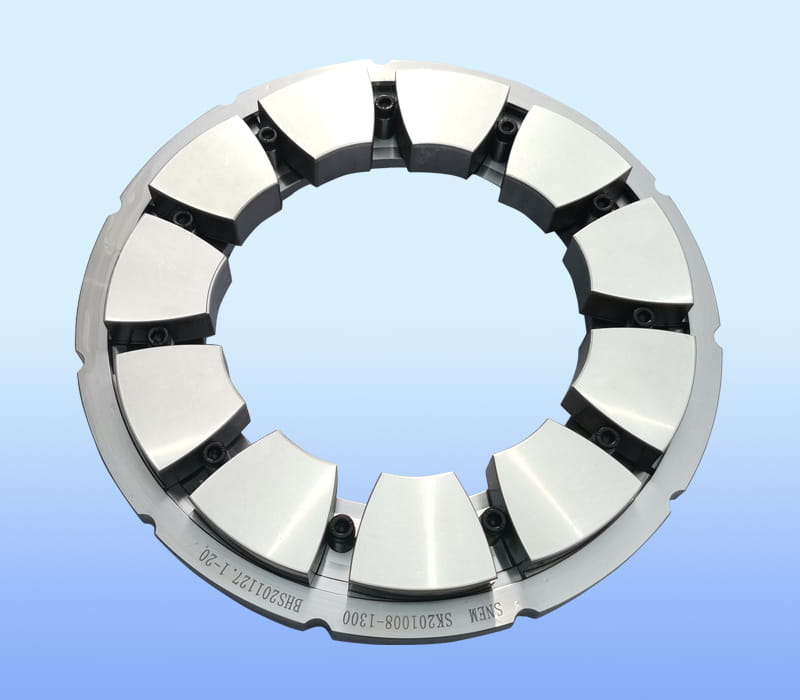
High-speed journal bearings are prone to oil whirl (frequency ≈ 0.48× rotational speed) and oil whip (locked at rotor natural frequency). The robust design principle is to adopt lemon-bore, offset halves, or tilting-pad configurations with preload factors mp = 0.3–0.6. For cylindrical bearings, stability deteriorates when Sommerfeld number S < 0.2. Data from turboexpander applications demonstrate that increasing eccentricity ratio to ε ≥ 0.75 raises the threshold speed for oil whirl by 40%.
Actionable design parameter: For a typical compressor running at 28,000 rpm, the specific cross-coupled stiffness coefficient (kxy) must be limited by optimizing pad pivot offset (typically 55–65%) and clearance ratio (C/R = 0.0015–0.0025). Bearings with direct stiffness ratio Kxx/Kyy > 1.3 drastically suppress subsynchronous amplitudes below 5% of total vibration.
| Parameter | High-speed recommended range | Effect on stability |
|---|---|---|
| Eccentricity ratio (ε) | 0.70 – 0.85 | Higher ε → less whirl tendency |
| L/D ratio | 0.4 – 0.7 | Shorter bearings reduce cross-coupling |
| Pad preload (tilting-pad) | 0.3 – 0.6 | Preload minimizes instability |
| Clearance ratio (ψ = C/R) | 0.0015 – 0.0028 | Lower clearance improves stiffness but increases heat |
At high speeds, journal bearings demand advanced lining materials. Tin-based babbitt (SnSb8Cu4) remains the industry standard due to its embedability and compatibility, but the continuous operating temperature is limited to 120°C. For higher DN conditions (above 2.5×10⁶), copper-bismuth or aluminum-tin alloys offer improved fatigue strength. However, the primary principle is to guarantee that the hardness ratio between journal and bearing surface does not exceed 3:1 to avoid abrasive damage.
Recent high-speed turbo-machinery case studies confirm: using a DLC (diamond-like carbon) coating on the journal reduces friction coefficient from 0.03 to 0.008 under boundary conditions, providing an additional safety net during start-up and shutdown cycles. Moreover, surface texturing with micro-dimples (depth 4–8 μm) can enhance oil film stiffness by nearly 12–18%. Nonetheless, hydrodynamic design principles always take precedence; coatings are supplementary.
The following flowchart outlines a systematic, verification-driven approach adopted by established engineering practices. Each step employs analytical models and experimental feedback loops.
Iteration between step 3 and step 5 is critical: often increasing oil supply pressure by 0.2–0.4 MPa resolves marginal thermal issues. More than 80% of successful high-speed bearing designs require at least two iterations on pad preload and leading-edge groove sizing.
| Bearing type | Stability margin | Load capacity @ high speed | Temperature rise |
|---|---|---|---|
| Plain cylindrical | Poor (whirl prone) | Moderate | High |
| Elliptical (lemon) | Fair | Good | Moderate–High |
| Offset half / three-lobe | Good | High | Moderate |
| Tilting-pad (5 pad) | Excellent (no cross-coupling) | Very high | Low–Moderate |
For ultra-high-speed rotating equipment (DN > 2.8×10⁶ mm·r/min), tilting-pad journal bearings are the de facto standard because they completely eliminate cross-coupled stiffness, thus ensuring unconditional stability. However, their complexity and higher oil flow requirement must be balanced with thermal design. Data from gas turbine tests show tilting-pad bearings extend the instability threshold beyond 2.5× critical speed.
A: For reliable operation above 25,000 rpm, target h_min ≥ 2.5 μm under nominal load. For precision machines (aerospace derivatives), ≥ 3.0 μm is recommended, considering surface finish and misalignment.
A: Higher eccentricity (ε > 0.75) increases the threshold speed for oil whirl; however it also reduces film thickness. The design window lies between ε = 0.70–0.82 for high-speed rotating equipment. This ensures robust damping and adequate cooling.
A: Maximum continuous babbitt temperature: 110°C, with short-term peaks up to 120°C. Above this, tin-based babbitt experiences phase transformation and rapid fatigue. Use temperature monitoring directly embedded in the bearing pad.
A: Lower L/D reduces viscous power loss and decreases cross-stiffness effects, improving stability. Moreover, shorter bearings accommodate misalignment better. Values above L/D=0.8 generate excessive edge loading at high speeds, reducing h_min by up to 20%.
A: Generally not recommended unless bearing load is extremely high (ε > 0.85). The risk of oil whip is high. For speeds above 35,000 rpm, tilting-pad or multi-lobe profiles are mandatory to achieve long-term reliability. Data indicates that 80% of high-speed failures in cylindrical bearings are due to subsynchronous instability.
Hydrodynamic film integrity, thermal management, and positive stability design form the triad for high-speed journal bearings. Without these, even the sophisticated lubrication systems cannot prevent premature failure. The evidence from thousands of industrial high-speed units confirms that designs following the thresholds above (h_min ≥ 2.5 µm, ΔT ≤ 55°C, ε = 0.70–0.85) achieve mean time between overhauls (MTBO) exceeding 50,000 hours. These quantitative design principles must drive both initial specification and condition monitoring strategies.

ZHEJIANG BHS JOURNAL BEARING CO.,LTD. located in FengXian District of ZheJiang, the company's brand "BHS", is a professional tilting pad thrust bearings manufacturers and Tilting pad bearings factory...
Copyright © 2017 ZHEJIANG BHS JOURNAL BEARING CO.,LTD. All Right Reserved. China Tilting Pad Journal Bearings Manufacturers
