
 Tel:+86-575 -87957662
 Email:
 English
 中文简体
中文简体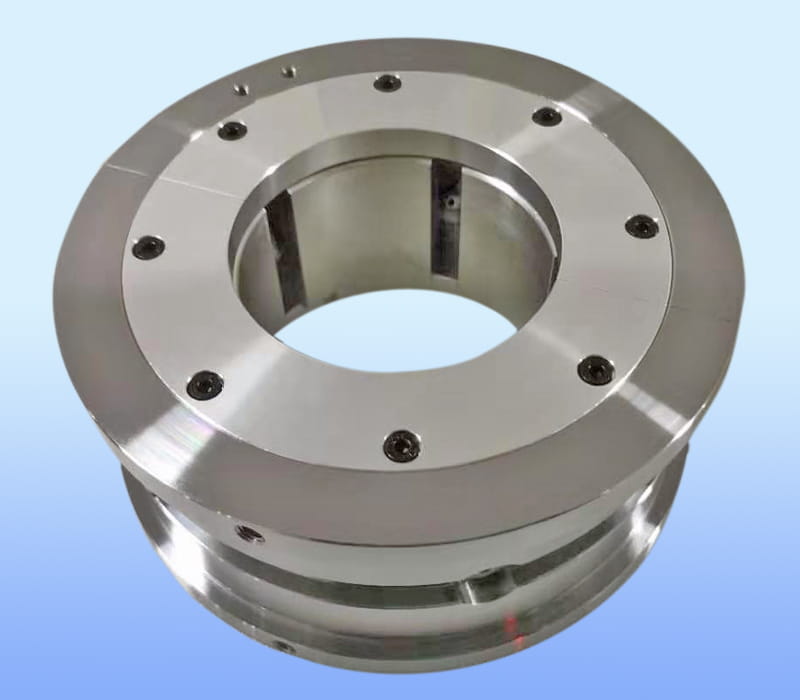
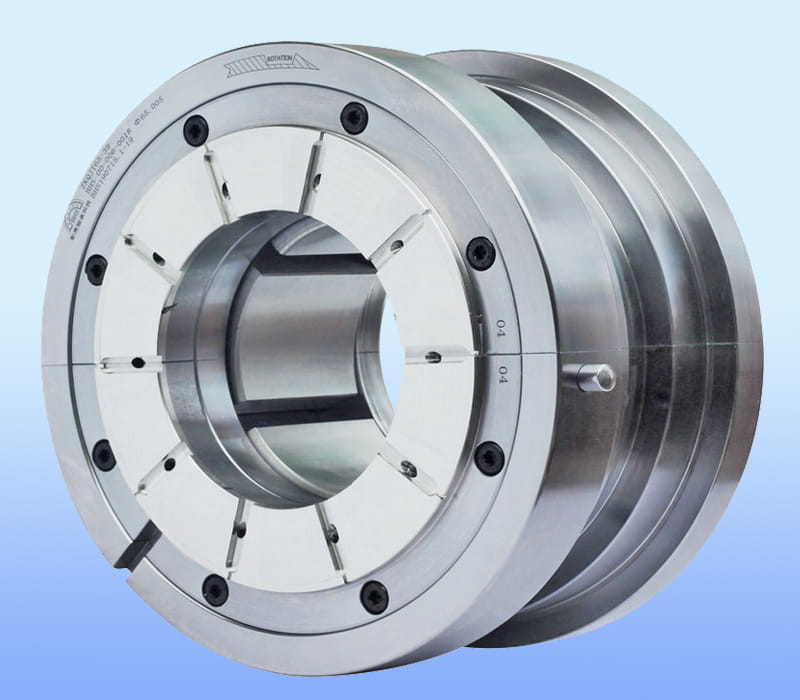
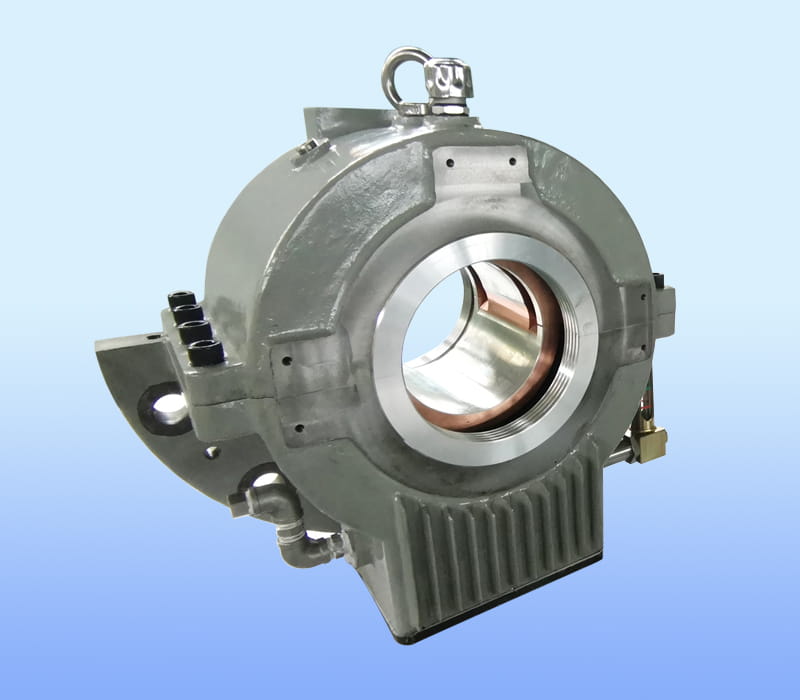
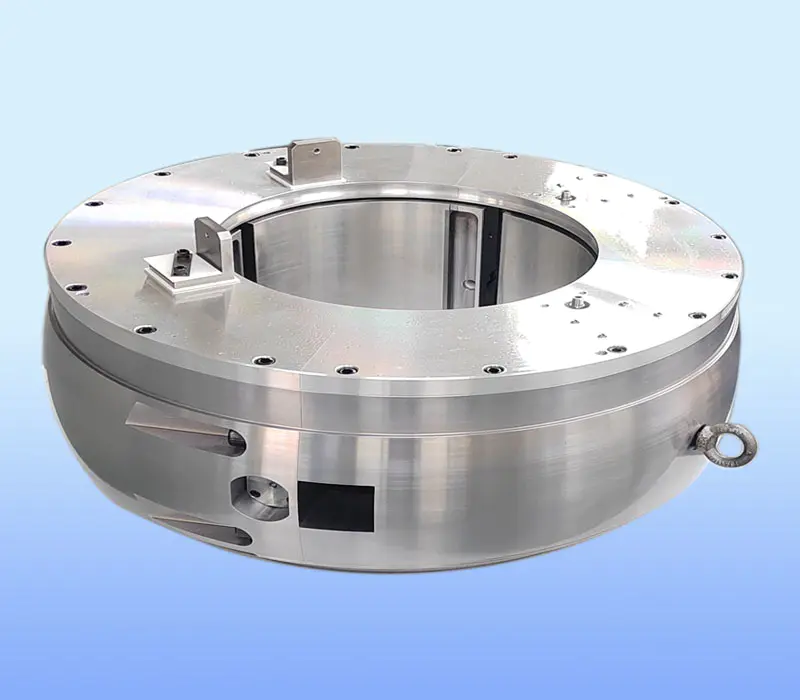
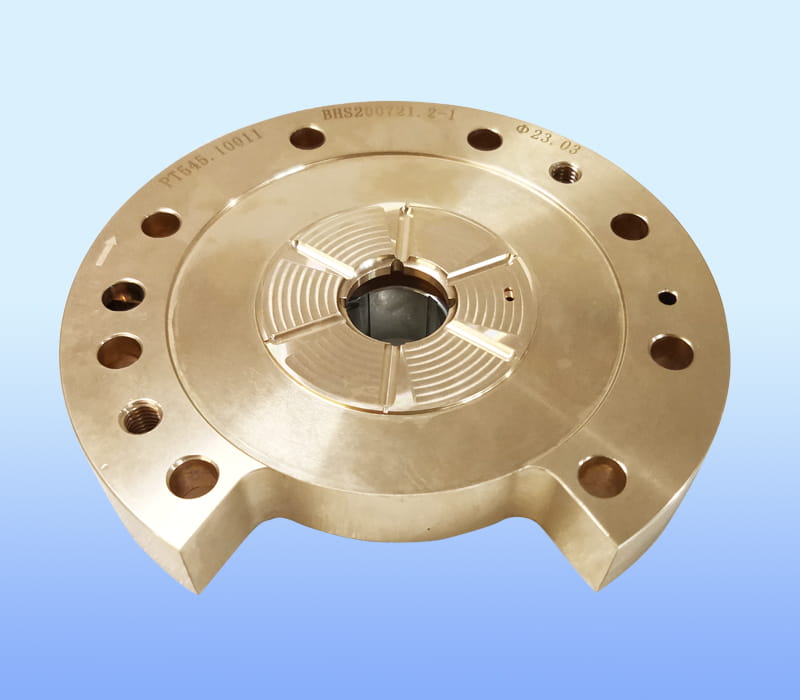
ZHEJIANG BHS JOURNAL BEARING CO.,LTD. located in FengXian District of ZheJiang, the company's brand "BHS", is a professional tilting pad thrust bearings manufacturers and Tilting pad bearings factory...

The Core Principle of Journal Bearings
A journal bearing supports a rotating shaft (the journal) within a stationary sleeve (the bearing) by generating a pressurized fluid film that completely separates the two surfaces. This load-carrying capability arises from the hydrodynamic effect: the relative motion between the shaft and the bearing draws lubricant into a converging wedge-shaped clearance, creating a pressure distribution that supports the applied load.
For a bearing to function correctly, three conditions must be met: (1) sufficient relative surface velocity, (2) a viscous lubricant, and (3) a converging clearance geometry. When these are present, the bearing operates in the full-film lubrication regime, where friction and wear are minimized.
The performance and lifespan of a journal bearing are determined by its lubrication regime. These regimes are defined by the degree of surface separation and are influenced by load, speed, and lubricant viscosity.
Occurs during start-up, shut-down, or at very low speeds. The lubricant film is insufficient to separate the surfaces, leading to direct asperity contact between the journal and bearing. This regime results in high friction and wear, and its duration should be minimized in design.
An intermediate state where the hydrodynamic pressure is partially generated, but some surface asperities still interact. This typically occurs during transitional speeds or under shock loading. Friction and wear are lower than in boundary lubrication but are still significant.
The ideal operating state. The journal rides on a complete, continuous lubricant film that entirely separates it from the bearing surface. The fluid pressure is generated by the shaft's rotation, balancing the external load. In this regime, friction is determined by fluid shear, and wear is virtually eliminated.
The transition from a resting shaft to a fully supported rotating shaft is a dynamic process that can be broken down into distinct steps.
When the shaft is stationary, it rests at the bottom of the bearing clearance due to its weight. The clearance is eccentric, with the shaft and bearing centers misaligned. At this point, there is direct metal-to-metal contact at the bottom of the bearing.
As the shaft begins to rotate, it drags the viscous lubricant into the converging wedge-shaped clearance between the shaft and the bearing. The lubricant is drawn into the narrowing gap due to its adhesion to the moving surface.
As the lubricant is forced through the converging gap, its pressure increases significantly. This self-generated pressure creates a hydrodynamic force that pushes the shaft away from the bearing surface. The shaft climbs the bearing wall in the direction of rotation until it finds its equilibrium position. At this point, the load is fully supported by the fluid film, and the bearing operates in the full-film regime.
| Regime | Typical Operating Condition | Surface Contact | Friction Level |
|---|---|---|---|
| Boundary | Start-up / Stop / Low Speed | Significant Asperity Contact | High |
| Mixed Film | Transitional Speed / Shock Load | Partial Asperity Contact | Moderate |
| Full Film (Hydrodynamic) | Normal Steady-State Operation | Complete Fluid Separation | Low (Fluid Shear only) |
Lubrication Regime vs. Operating Conditions
Optimizing journal bearing performance involves balancing several key geometric and operational parameters. These variables determine the bearing's load capacity, power loss, and stability.
The difference between the bearing inner radius and the shaft radius. Optimal clearance is critical: too small, and the oil film cannot form properly, leading to overheating and seizure; too large, and the oil film becomes unstable, causing excessive vibration and reduced load capacity. Clearance is a primary factor influencing the minimum oil film thickness.
This ratio defines the bearing's geometry. A higher L/D ratio (a longer bearing) provides greater load capacity but also increases power loss due to higher viscous shear. The design choice depends on the specific load and speed requirements of the application.
Viscosity, which is highly temperature-dependent, directly affects film thickness and friction. A higher viscosity lubricant creates a thicker film but also generates more frictional heat. The selection must ensure that adequate film thickness is maintained at the bearing's operating temperature.
The surface finish of both the journal and the bearing influences the onset of mixed lubrication. Smoother surfaces allow for a higher film thickness ratio. Research indicates that optimizing surface texture can significantly enhance tribological performance.
Beyond basic load support, a well-designed journal bearing must maintain a stable and predictable dynamic performance. Two common instability phenomena are particularly critical in high-speed applications.
At high speeds, the hydrodynamic forces can become unstable, causing the shaft to orbit within the bearing clearance. Oil whirl is a subsynchronous vibration occurring at a frequency slightly below half the rotational speed (typically 0.40x to 0.48x). If the whirl frequency coincides with a natural frequency of the rotor system, it can become a violent and destructive oil whip, potentially leading to catastrophic failure.
Journal bearings provide significant damping, which is crucial for controlling rotor vibrations. The stiffness and damping coefficients of the lubricant film are non-linear and depend on the operating conditions and bearing geometry. These coefficients are essential for modeling and predicting rotor-dynamic behavior.
The specific geometry of a journal bearing is tailored to meet the demands of its application. Key types include the following.
The simplest and most common design, featuring a straightforward cylindrical bore. They are highly cost-effective and suitable for a wide range of general-purpose applications like pumps, motors, and gearboxes under steady loads and moderate speeds.
Designed with non-circular bores (e.g., elliptical) to create pre-loaded hydrodynamic wedges. This design improves stability at high speeds by reducing the cross-coupled stiffness that causes oil whirl. They are commonly found in compressors and high-speed blowers.
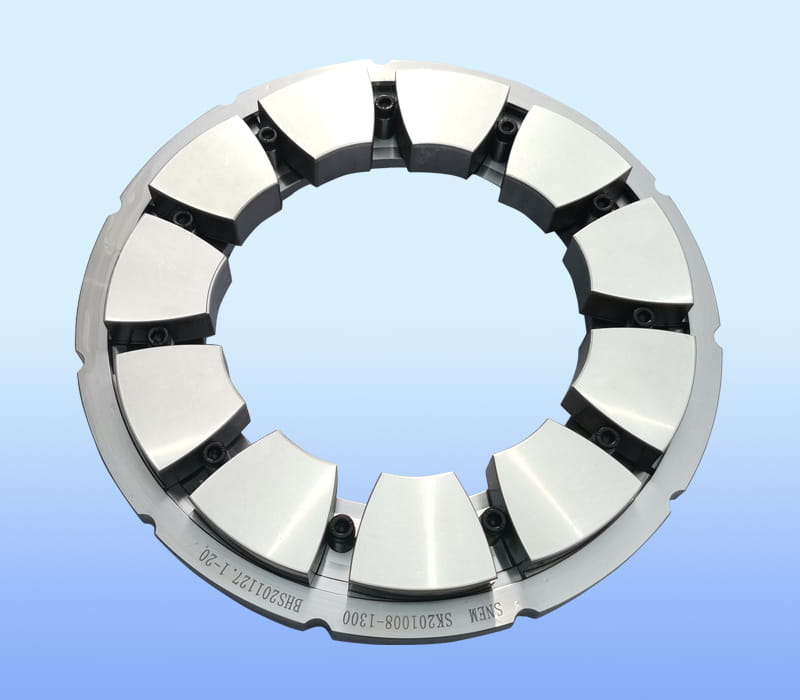
Consist of individual pads that pivot to automatically form the optimal hydrodynamic wedge. This configuration offers exceptional stability and damping over a wide speed range and is the preferred choice for high-performance turbomachinery, despite its higher cost and complexity.
Combine self-acting (hydrodynamic) principles with external pressurization (hydrostatic). An external pump provides high-pressure oil to lift the shaft at zero or low speeds, preventing start-up wear. At operating speed, they transition to hydrodynamic operation, offering the benefits of both types.
Based on the principles of hydrodynamic lubrication, the following conclusions are central to the successful design and operation of journal bearings.
Its primary function is to provide lateral (radial) support to a rotating shaft with minimal friction. It does this by generating a high-pressure fluid film that separates the moving shaft from the stationary bearing surface.
Radial clearance is crucial because it dictates the volume available for the lubricant film and the shape of the hydrodynamic wedge. Incorrect clearance can lead to either insufficient film thickness (leading to contact and wear) or an unstable, highly dynamic film (leading to vibration).
Oil whirl is a stable subsynchronous vibration of the shaft (at ~0.4-0.48x rotational speed) caused by the hydrodynamic forces in the bearing. Oil whip is the more severe condition that occurs when the frequency of the whirl locks onto a natural resonant frequency of the rotor system, leading to large and potentially destructive vibration amplitudes.
Tilting-pad bearings offer superior rotordynamic stability because their individual pads pivot to create the best wedge profile, effectively preventing oil whirl. They also handle misalignment better and operate efficiently over a wider speed range, though they are more expensive to manufacture.

ZHEJIANG BHS JOURNAL BEARING CO.,LTD. located in FengXian District of ZheJiang, the company's brand "BHS", is a professional tilting pad thrust bearings manufacturers and Tilting pad bearings factory...
Copyright © 2017 ZHEJIANG BHS JOURNAL BEARING CO.,LTD. All Right Reserved. China Tilting Pad Journal Bearings Manufacturers
