
 Tel:+86-575 -87957662
 Email:
 English
 中文简体
中文简体
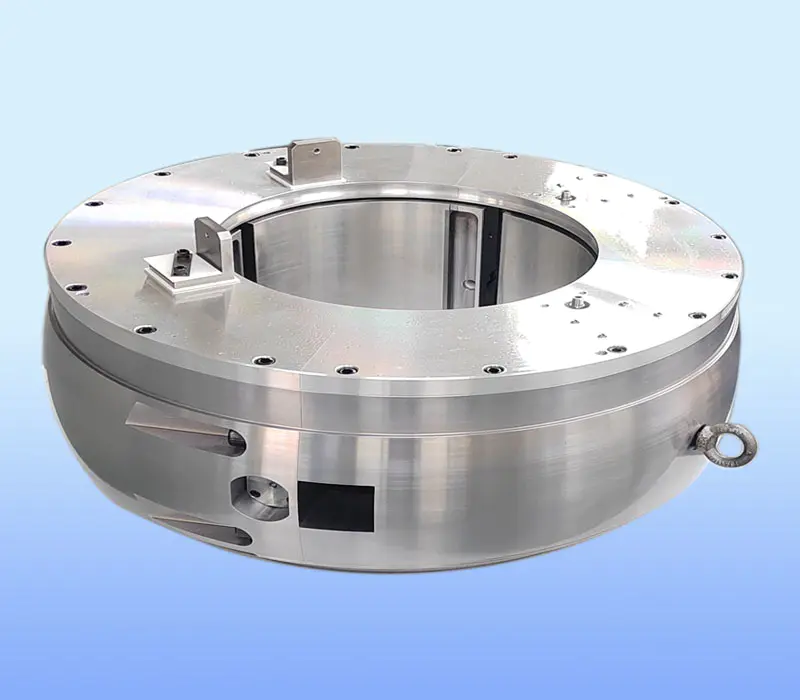
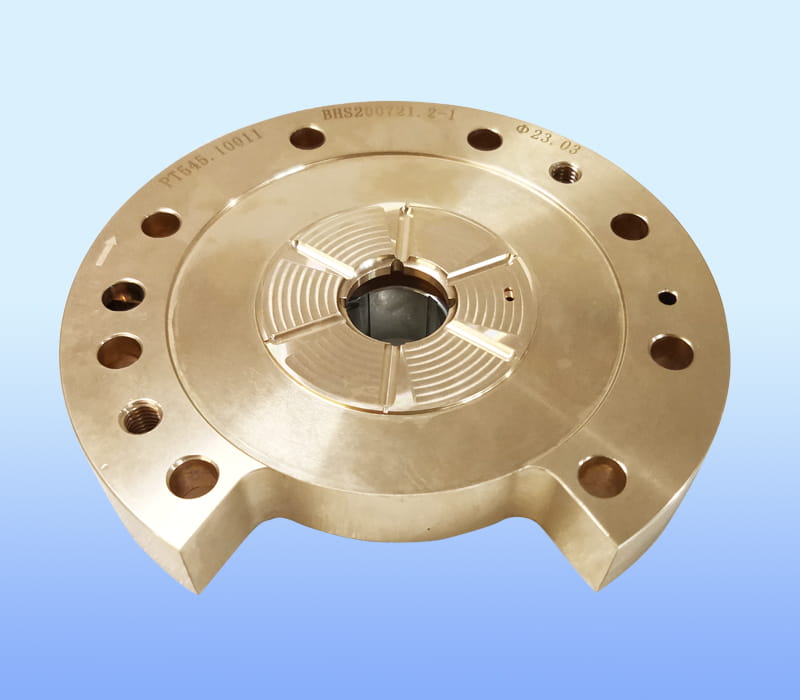
ZHEJIANG BHS JOURNAL BEARING CO.,LTD. located in FengXian District of ZheJiang, the company's brand "BHS", is a professional tilting pad thrust bearings manufacturers and Tilting pad bearings factory...

For high-precision gearbox bearings, effective vibration control is not an option but a necessity. Excessive vibration reduces bearing service life by up to 40% and directly causes positioning errors exceeding 0.01mm in precision motion systems. Without rigorous vibration damping, even nanometer-grade manufacturing tolerances become irrelevant within months of operation.
Vibration induces three primary failure mechanisms in gearbox bearings: false brinelling, fretting corrosion, and fatigue spalling. Each mechanism directly erodes positional accuracy and torque consistency.
False brinelling occurs at vibration amplitudes as low as 0.5 µm, creating wear flats that increase rotational torque variation by 15-25%. For precision applications like robotic joints or CNC rotary tables, this translates into unacceptable backlash.
Case example: In a high-speed machining spindle gearbox, reducing bearing housing vibration from 2.8 mm/s to 0.9 mm/s increased bearing precision retention period from 800 hours to over 3,500 hours.
Identifying and quantifying vibration sources is the actionable step for any precision gearbox design. The table below ranks common sources by frequency range and severity.
Actionable guidance: Measure vibration velocity (mm/s RMS) at bearing housing locations. For high-precision gearboxes, target values should be below 1.0 mm/s for frequencies 10-1000 Hz, and below 0.5 mm/s above 1 kHz.
Implementing targeted vibration control strategies delivers measurable improvements in gearbox bearing performance. The following data are derived from controlled tests on precision planetary gearboxes (backlash class P0).
Choose angular contact ball bearings with grade P4 (ABEC-7) or higher for precision gearboxes. P4 bearings limit raceway waviness to under 0.13 µm, directly reducing high-frequency vibration. Apply light preload (2-5% of dynamic load rating) to eliminate internal clearance without generating excessive heat. Preload reduces bearing vibration velocity by 30-45% compared to clearance operation.
Use interference fits (j5 to k6 for shafts, P7 for housings) in precision applications. A loose fit of 5 µm clearance increases bearing vibration by 120% due to raceway deformation under load. For steel bearings in aluminum housings, design for thermal expansion – a fit allowance of 10-15 µm at 20°C maintains proper clamping at operating temperature.
Integrate constrained layer damping (CLD) on bearing housings or gearbox casing. A 1.5 mm viscoelastic layer sandwiched between steel skins reduces resonant vibration peaks by 70-85% without increasing mass significantly. For retrofit applications, apply high-damping polymer sleeves (loss factor >0.8) between bearing outer ring and housing.
High-viscosity synthetic oils (ISO VG 68-150) with tackiness additives provide film damping that absorbs micro-vibrations. In tests, switching from standard ISO VG 46 to VG 150 synthetic reduced bearing vibration amplitude by 22% at 3000 rpm. However, ensure adequate flow – for high-speed precision gearboxes (>8000 rpm), use ISO VG 32-46 with anti-wear additives to balance damping and heat dissipation.
The following table provides practical vibration acceptance criteria for gearbox bearings based on application precision requirements. These values are measured at the bearing housing in three orthogonal axes.
Critical note: These limits apply only under normal operating load and speed. During transient conditions (startup, braking, shock loads), temporary peaks up to 2× the limit are acceptable if duration is under 100 ms.
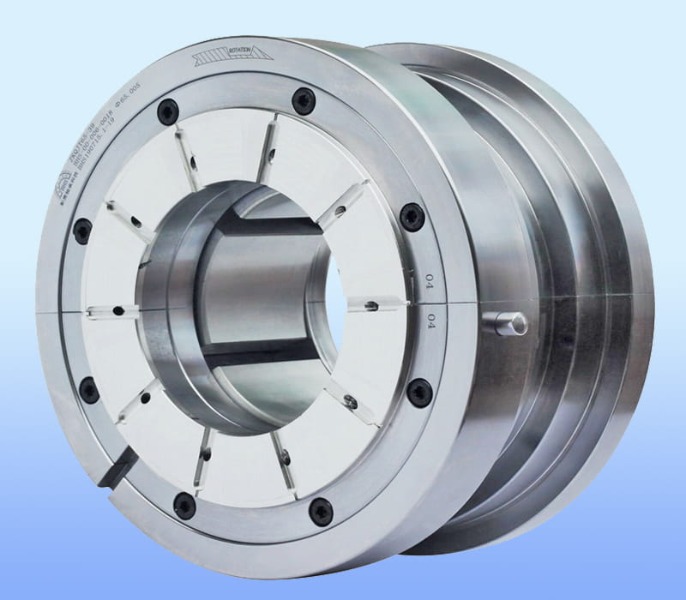

ZHEJIANG BHS JOURNAL BEARING CO.,LTD. located in FengXian District of ZheJiang, the company's brand "BHS", is a professional tilting pad thrust bearings manufacturers and Tilting pad bearings factory...
Copyright © 2017 ZHEJIANG BHS JOURNAL BEARING CO.,LTD. All Right Reserved. China Tilting Pad Journal Bearings Manufacturers
