
 Tel:+86-575 -87957662
 Email:
 English
 中文简体
中文简体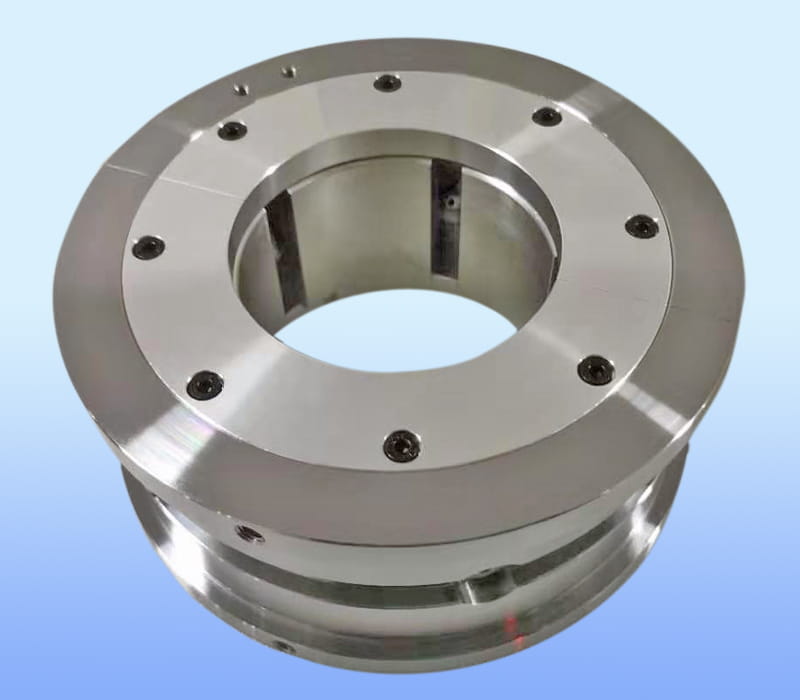
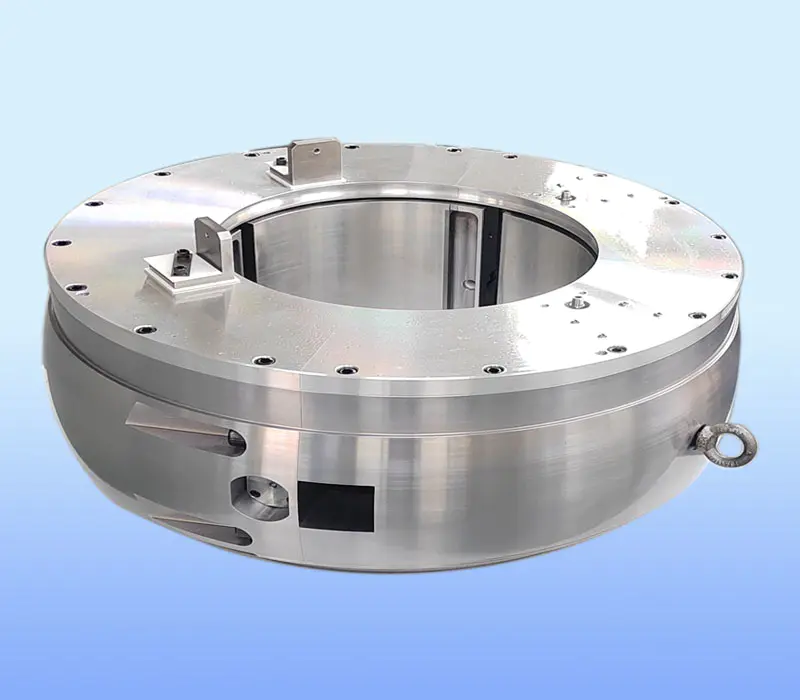
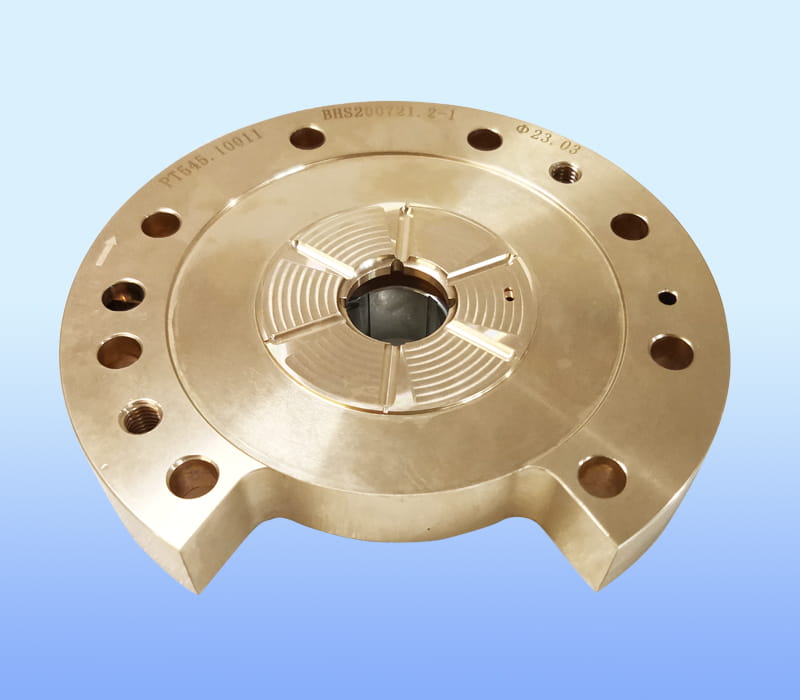
ZHEJIANG BHS JOURNAL BEARING CO.,LTD. located in FengXian District of ZheJiang, the company's brand "BHS", is a professional tilting pad thrust bearings manufacturers and Tilting pad bearings factory...

In the realm of rotary machinery, few components bear as much responsibility—literally and functionally—as the bearing. When the discussion narrows to compressors, the significance of this seemingly small part multiplies exponentially. A compressor transforms mechanical energy into fluid energy, often under high pressure, elevated temperatures, and sustained duty cycles. At the heart of this process lies the compressor bearing, a precision element that dictates not only rotational freedom but also alignment, vibration control, and fatigue life. Selecting the wrong bearing does not merely invite premature wear; it risks catastrophic failure, unplanned downtime, and safety hazards. Thus, understanding why bearing selection is critical in compressors is not an engineering nicety—it is an operational necessity.
Before dissecting selection criteria, one must appreciate what a bearing accomplishes inside a compressor. At its simplest, a bearing supports a rotating shaft while minimizing friction. However, within a compressor, the demands intensify. The shaft carries impellers, rotors, or scroll elements that compress gas or vapor. These components generate radial and axial forces, sometimes simultaneously. A compressor bearing must therefore manage:
Without a properly selected bearing, friction rises, heat builds, and clearances shift. In oil-free compressors, the challenge magnifies because bearings must operate without traditional lubricant films. In refrigerant compressors, chemical compatibility with refrigerants and oils becomes paramount. Hence, the choice of a compressor bearing directly influences energy efficiency, noise levels, vibration signature, and overhaul intervals.
When engineers overlook bearing selection nuances, several failure modes emerge. Each carries distinct operational and financial penalties.
| Failure Mode | Primary Cause Related to Selection | Typical Result |
|---|---|---|
| Fatigue spalling | Underestimated dynamic load rating | Vibration increase, debris circulation |
| Overheating | Incorrect internal clearance or speed rating | Lubricant degradation, seizure |
| Cage fracture | Incompatible cage material or design | Sudden lock-up, rotor damage |
| False brinelling | Wrong bearing type for standby vibration | Raceway wear during idle periods |
| Electrical fluting | Lack of insulation in VFD-driven compressors | Premature bearing noise, surface damage |
Beyond these discrete failures, poor selection degrades volumetric efficiency. When a bearing allows excessive radial runout, the compression gap widens, allowing internal gas leakage. A compressor that once delivered rated flow may lose 5–15% capacity silently, masked by other maintenance variables. Similarly, axial play beyond specification alters rotor position relative to fixed volutes or end plates, modifying the compression ratio dynamically. These subtle performance losses accumulate into significant energy waste over months.
Every compressor operates under a specific load profile. Reciprocating compressors produce highly pulsating loads because each piston stroke creates torque variation. Scroll and screw compressors deliver smoother, but still cyclically varying, loads due to intermittent compression chambers. Centrifugal compressors, by contrast, impose steady, high-speed radial loads but also substantial thrust from pressure differentials across impellers.
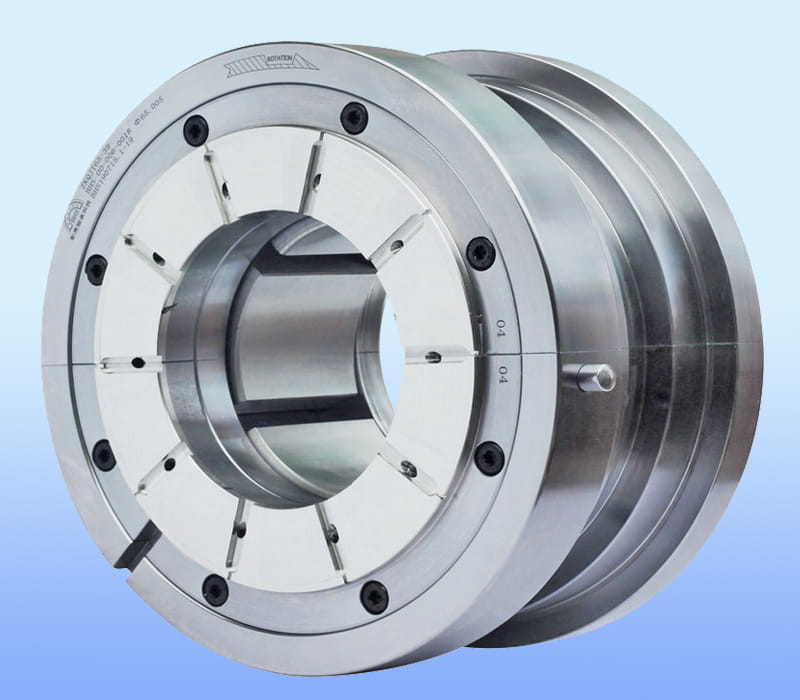
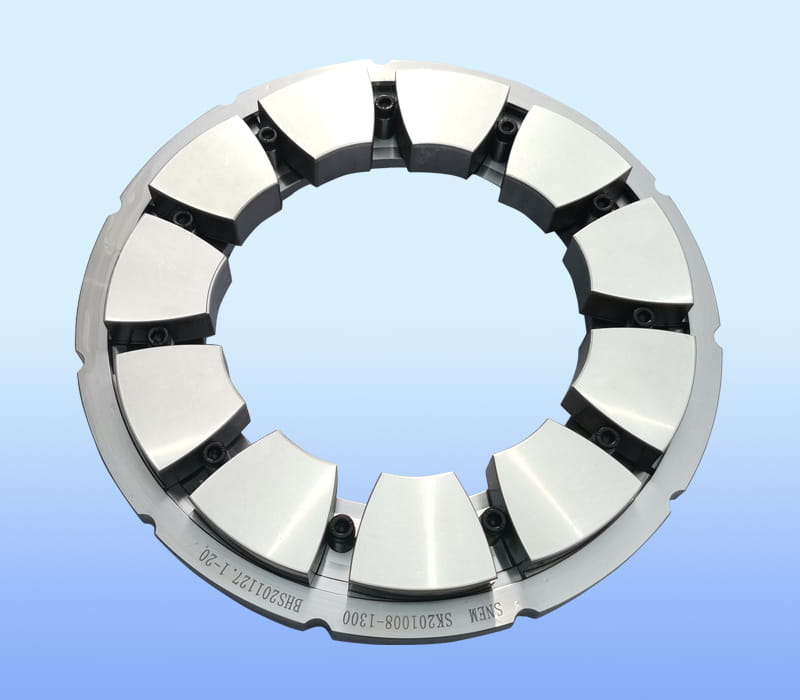
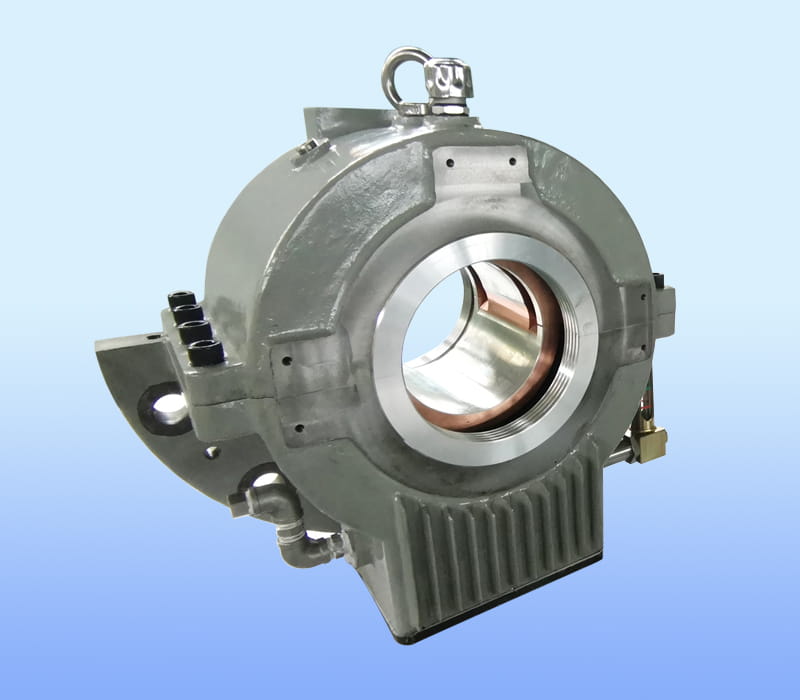
For reciprocating applications, the compressor bearing must tolerate shock loads. Roller bearings with thicker rolling elements or specialized steel grades become necessary. In screw compressors, paired rotors generate both radial and axial forces; thus, angular contact ball bearings or tapered roller bearings are common. Centrifugal machines often employ tilting-pad journal bearings for radial support and double-acting thrust bearings for axial control. Selecting a bearing type that mismatches the load nature—for instance, using deep groove ball bearings in a high-shock environment—will accelerate raceway denting and micro-spalling.
Speed is not merely about RPM ratings. It involves the bearing’s limiting speed factor, which depends on lubricant viscosity, cage design, and heat dissipation capacity. High-speed compressors, such as those used in turboexpander-compressor units, require precision bearings with lightweight cages (phenolic resin, PEEK, or brass). Standard stamped steel cages may deform under centrifugal force, causing cage instability and subsequent roller skew.
Temperature imposes another filter. Compression heats gas; the heat migrates to shafts and bearings. A compressor bearing operating at 120°C continuously requires different internal clearance (C3 or C4) than one operating at 70°C. Ignoring thermal expansion risks bearing seizure when the shaft expands more than the housing. Conversely, oversized clearance in a cold-running compressor leads to excessive vibration and poor load distribution. Moreover, high temperatures degrade standard greases and reduce oil film thickness. For compressors using hydrocarbon refrigerants, bearing materials must resist chemical attack from acidic byproducts generated under high-temperature operation.
Lubrication is the lifeblood of any rolling or sliding bearing. In compressors, the lubricant serves dual roles: cooling and sealing. Oil-flooded screw compressors circulate large volumes of oil that carry away compression heat and seal rotor clearances. The oil also lubricates the compressor bearing. However, the same oil may contain particulate debris from rotor contact or aging breakdown. Bearings in these environments need enhanced debris tolerance—hence, modified internal geometry or hardened raceways.
Oil-free compressors eliminate oil from the compression chamber but still require bearing lubrication. Often, grease-lubricated bearings are separated from the compression zone via seals or magnetic couplings. Here, the compressor bearing selection must account for regreasing intervals, grease life at operating temperature, and resistance to process gas ingress if seals degrade. For refrigerant compressors, the bearing lubricant is a mixture of refrigerant and oil. Low-viscosity mixtures demand bearings with special surface finishes or coatings (e.g., DLC or phosphate) to prevent metal-to-metal contact during startup or transient conditions.
The table below summarizes lubrication-based selection considerations:
| Lubrication Type | Bearing Requirement | Risk if Mismatched |
|---|---|---|
| Oil-flooded (high viscosity) | Larger internal clearances, debris-resistant materials | Starvation during cold start, overheating |
| Oil-free / Grease | Long-life grease, shielded or sealed bearings | Premature grease degradation, contamination ingress |
| Refrigerant-oil mixture | Anti-corrosion coatings, optimized surface finish | Wear from low film strength, chemical corrosion |
| Process gas lubricated (specialty) | Self-lubricating materials (e.g., PTFE composites) | Rapid wear, seizure under load |
Bearing manufacturers provide standardized life calculations (L10, L10h) based on dynamic load rating and equivalent load. However, many compressor failures arise from applying these ratings without system adjustments. A compressor bearing may see variable loads due to suction pressure fluctuations, discharge pulsations, or occasional liquid slugging. Direct application of steady-state life formulas underestimates actual fatigue. Furthermore, life calculations assume clean lubrication and alignment—conditions rarely maintained in field operations.
Smart selection incorporates safety factors: 2x to 3x the required life for critical compressors, especially in continuous process industries (refining, chemical plants, gas transmission). Additionally, life adjustments for contamination (using life modification factors a2 and a3 per ISO 281) are essential. Selecting a bearing solely on basic load rating without considering operating viscosity ratio (κ) and contamination level (ηc) leads to premature failure that technicians often misdiagnose as oil quality issues.
Bearings influence compressor acoustics and mechanical stability. Loose internal clearance allows the shaft to orbit within the bearing clearance, generating subsynchronous vibration. In high-speed centrifugal compressors, this orbital motion can trigger rotordynamic instability, causing fluid-induced whirl or whip. Those phenomena damage seals, impellers, and bearings simultaneously. Conversely, excessive preload in angular contact bearings raises stiffness but reduces damping, transmitting more high-frequency vibration to the housing and connected piping.
For reciprocating compressors, the compressor bearing must manage alternating loads without excessive radial play, or else piston side loads induce cylinder wear. Variable-speed drives (VSD) complicate matters further. Bearings must operate across a speed range, avoiding natural frequencies of the shaft-bearing system. A bearing that performs silently at 1500 RPM may resonate at 2400 RPM, accelerating cage wear. Therefore, selection involves not only static load ratings but also eigenvalue analysis of the assembled rotor-bearing system.
No bearing lasts forever. But selection dictates how and when replacement occurs. Some compressor designs place bearings in split housings, allowing inspection without major disassembly. Others—especially integrally geared compressors—require complete teardown to replace a single compressor bearing. In such cases, selecting bearings with proven longevity (e.g., hybrid ceramic ball bearings) may justify higher upfront cost because of avoided downtime.
Predictive maintenance methods—vibration analysis, oil debris monitoring, thermography—all depend on bearing failure modes. Selecting bearings with known failure progression (e.g., gradual spalling versus sudden cage fracture) allows operators to plan interventions. Catastrophic failure modes are unacceptable in compressors serving sterile pharmaceutical air or refinery instrument air systems, where sudden shutdown endangers production or safety. Thus, bearing selection includes selecting failure mode characteristics, not just load and speed capacities.
Bearing selection in compressors cannot be an afterthought. It is a strategic decision that affects energy consumption, reliability, maintenance frequency, and total cost of ownership. The compressor bearing sits at the intersection of mechanical loads, thermal conditions, lubrication chemistry, and operational dynamics. A mismatch in any one parameter degrades performance; mismatches in two or more guarantee failure.
Engineers and maintenance professionals must move beyond generic bearing catalogs. They must analyze load spectra, thermal transients, contamination sources, and access constraints. They must calculate not just L10 life, but also lubricant life, contamination adjustment, and vibration thresholds. When done correctly, the chosen bearing operates quietly, efficiently, and predictably for years. When done poorly, the bearing becomes the weakest link—and compressors simply cannot afford weak links.
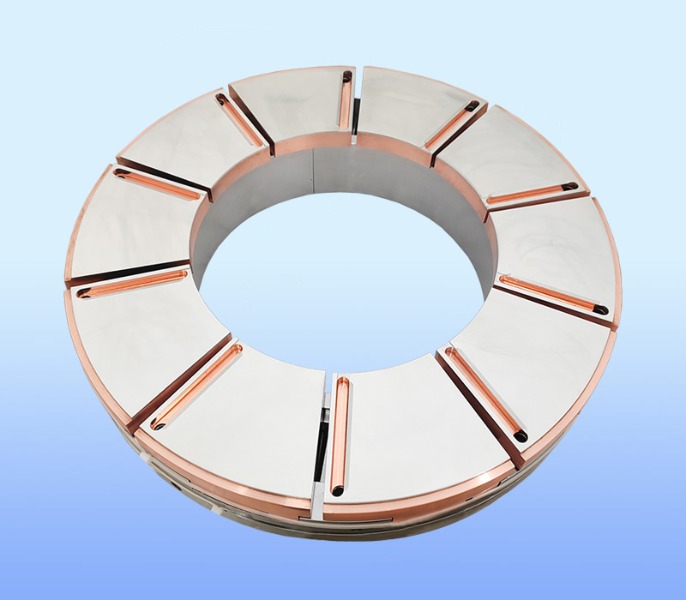

ZHEJIANG BHS JOURNAL BEARING CO.,LTD. located in FengXian District of ZheJiang, the company's brand "BHS", is a professional tilting pad thrust bearings manufacturers and Tilting pad bearings factory...
Copyright © 2017 ZHEJIANG BHS JOURNAL BEARING CO.,LTD. All Right Reserved. China Tilting Pad Journal Bearings Manufacturers
