
 Tel:+86-575 -87957662
 Email:
 English
 中文简体
中文简体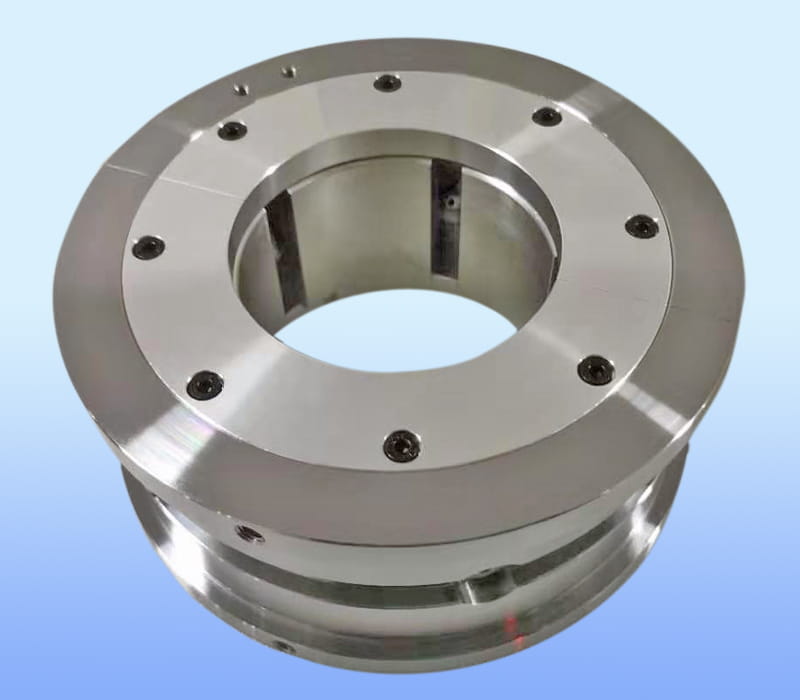
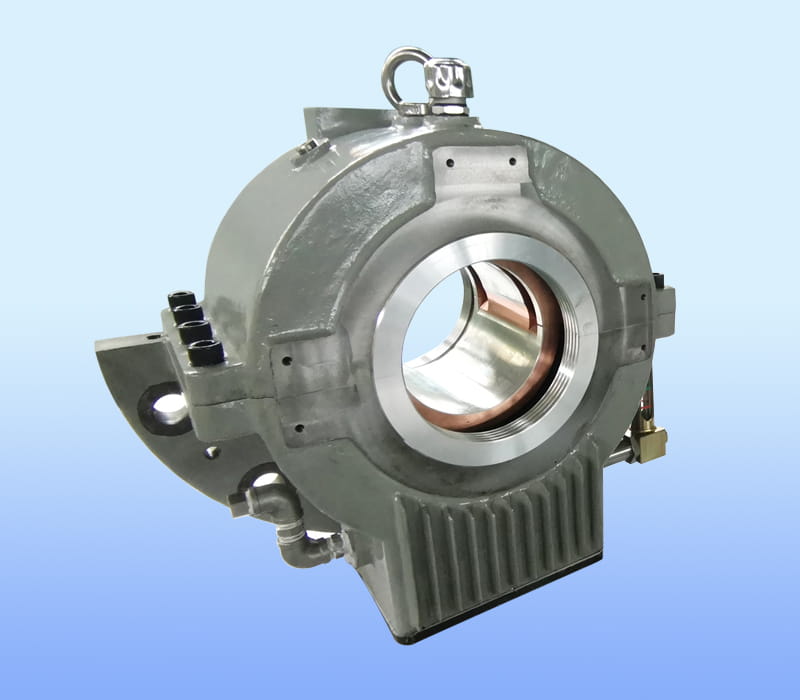
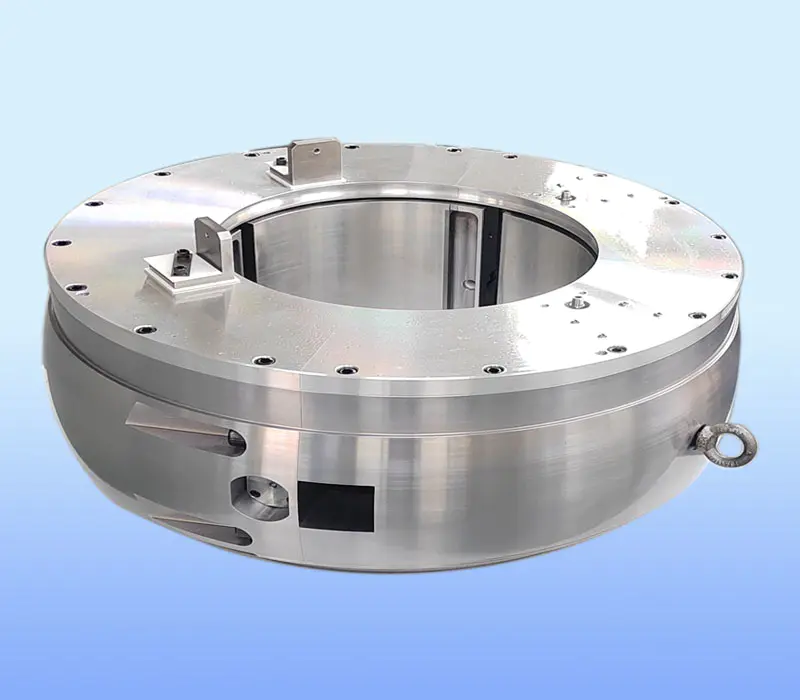
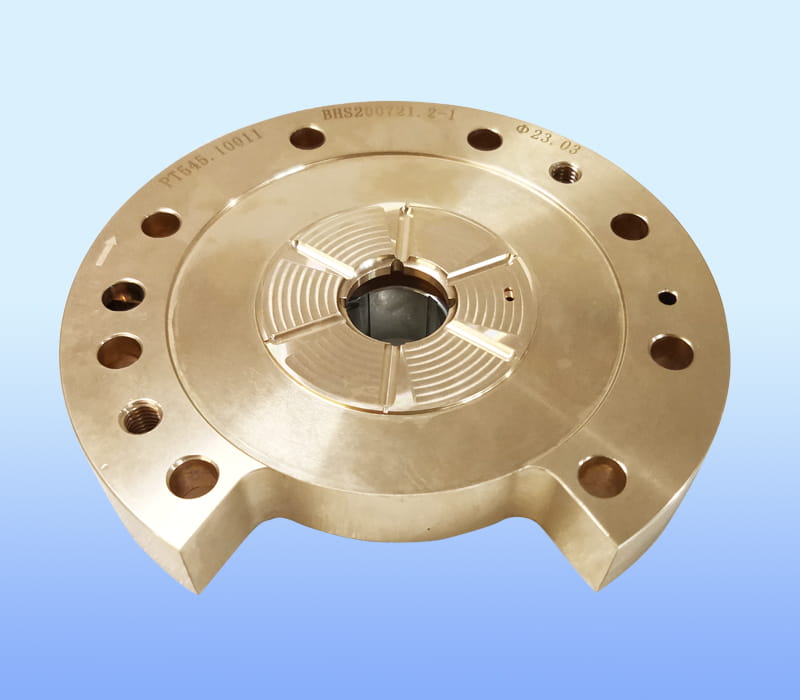
ZHEJIANG BHS JOURNAL BEARING CO.,LTD. located in FengXian District of ZheJiang, the company's brand "BHS", is a professional tilting pad thrust bearings manufacturers and Tilting pad bearings factory...

In rotating machinery, axial loads generated by impellers, rotors and hydraulic forces must be carried by a dedicated component. For decades the default solution was a babbitt-faced tilting pad or a fixed segment running on an oil film. These designs work well, but they depend heavily on lubricant quality, startup procedure and thermal stability. When operating conditions drift away from the design point, a metal-faced pad can scuff, smear or seize within a short period.
This is why many design teams are now evaluating ptfe and peek bearings as a practical alternative. Polymer-faced solutions keep the steel carrier and the tilting geometry that engineers already trust, while replacing the sliding surface with a material that tolerates boundary lubrication, dry starts and brief contamination far better than conventional white metal.
This article explains how polymer tilting pad thrust bearings are built, compares the two main polymer families, describes the performance benefits that matter in the field and offers a practical framework for choosing the right facing material for pumps, vertical motors and turbomachinery.
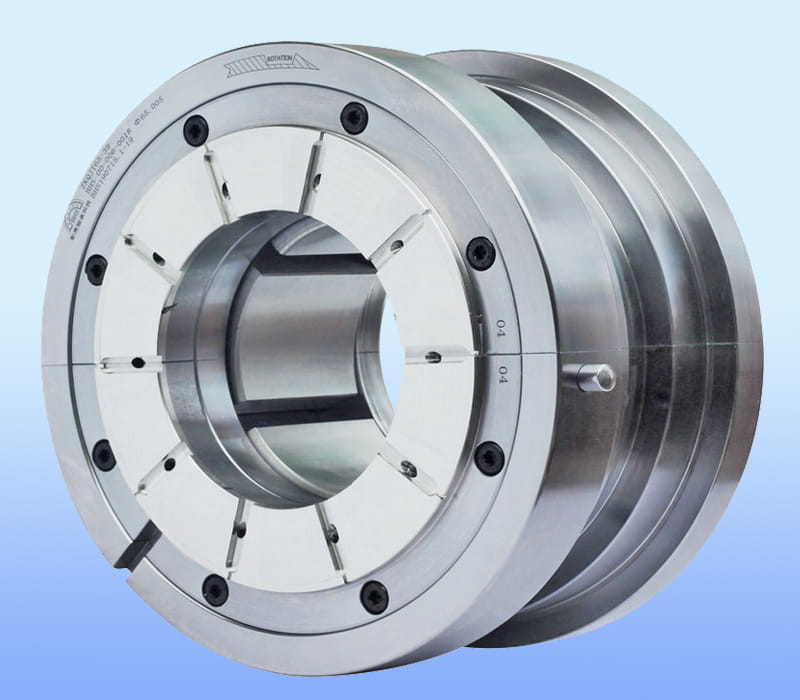
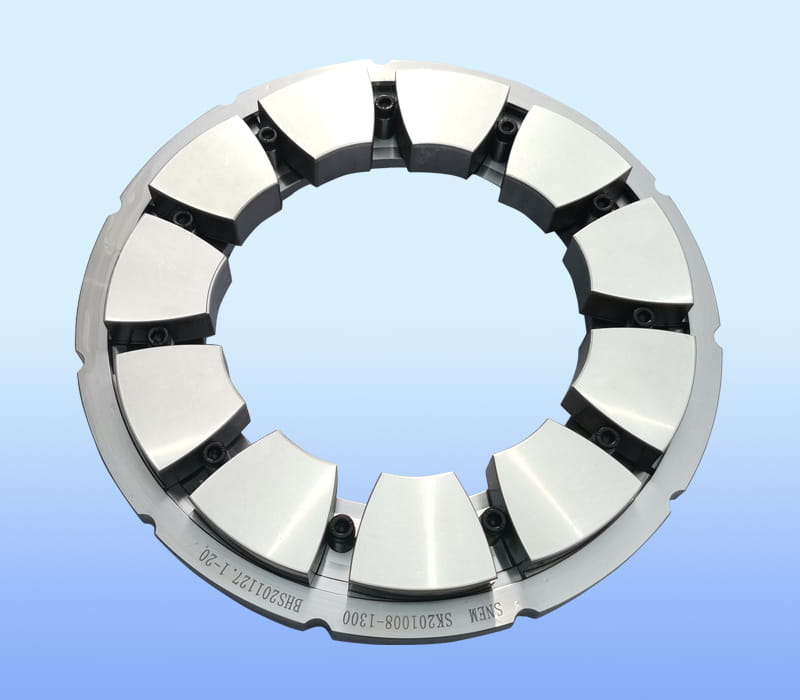
A tilting pad thrust bearing is a segmented plain bearing. A set of pads sits around the circumference of a collar or runner attached to the shaft. Each pad is free to pivot on a point or ball support, so it can adopt the small angle needed to draw lubricant into a wedge-shaped gap. This hydrodynamic principle allows the bearing to carry heavy axial loads without depending on a rigid, perfectly aligned surface.
In a polymer version, each pad consists of a metal carrier, usually steel, and a bonded or mechanically retained polymer layer on the working face. The carrier provides stiffness and a reliable attachment point for the pivot. The polymer layer is the part in contact with the runner, and it governs most of the friction and wear behaviour.
Pivot geometry matters as much as the facing material. Point pivots, ball pivots and flexible pivots each change how a pad responds to load and minor misalignment. Engineers usually specify the pivot type together with the pad count, which commonly ranges from five to twelve depending on shaft diameter and load.
A conventional babbitt face relies on a thick oil film to avoid contact at startup and at low speed. A polymer face can accept intermittent boundary contact without immediate damage. This does not mean the bearing can run without lubrication, but it gives the designer a wider safety margin when speed is low, load is high or the oil supply is briefly interrupted.
Both materials are high-performance polymers used in demanding bearing applications, but they behave differently. Selection should be based on the operating envelope rather than on a general preference for one material.
PTFE offers very low friction and excellent resistance to a broad range of chemicals. Its surface releases contaminants readily, and it is comparatively forgiving during dry or near-dry starts. Its main limitation is mechanical. Under sustained high compressive load it creeps more than engineered high-performance thermoplastics, so it suits moderate loads and temperatures best.
PEEK has higher stiffness, better creep resistance and stronger performance at elevated temperature. It is often selected for heavier loads, higher speeds and applications where dimensional stability is critical. Its friction under dry conditions is usually higher than that of PTFE, so the lubrication design around it carries more weight.
| Property | PTFE facing | PEEK facing |
|---|---|---|
| Friction tendency | Very low | Low to moderate |
| Creep under sustained load | Higher | Lower |
| Chemical resistance | Excellent | Very good |
| Dry start tolerance | Excellent | Good |
| Typical load range | Moderate | Moderate to heavy |
| Typical temperature range | Moderate | Higher |
A practical rule: when frequent starts and aggressive media dominate, PTFE is usually the first candidate. When load, speed and temperature dominate, PEEK is usually the safer choice.
The value of a polymer tilting pad thrust bearing shows up most clearly during transient events. Startup, shutdown, load swings and short lubrication interruptions are the moments when metal-faced pads are most vulnerable, and they are the moments where a solid polymer face offers the greatest margin.
Low friction reduces heat generation at the interface. In a high speed tilting pad thrust bearing, this matters because heat that is not removed quickly can thin the oil film and accelerate wear. A polymer face with a low friction tendency helps keep the interface temperature stable, and its resistance to adhesion reduces the risk of seizure when the runner briefly loses full hydrodynamic support.
Many pump and process applications involve fluids that attack metal surfaces or degrade lubricants. Polymer facings resist a wide range of media, which makes them well suited to chemical plant pumps and equipment that handles water with dissolved solids. The resistance also protects the runner from the galling that often follows corrosion-assisted wear.
The tilting pad design allows each pad to adjust its angle under load. This self-alignment produces a converging gap that draws oil into the contact zone and builds a stable film. When the polymer face is combined with this geometry, the bearing can carry substantial axial force while still tolerating the small misalignments that occur during installation and thermal growth.
Polymer thrust bearings appear wherever a rotating shaft transmits axial force and the operating conditions make metal-faced pads a compromise. Each environment presents a different balance of load, speed and fluid chemistry, which is why no single facing material is optimal everywhere.
Consider a vertical pump at a water handling station that runs with frequent starts during peak demand. In a representative case of this type, the original babbitt thrust pads showed scuffing after repeated dry-start events. After switching to a polymer tilting pad arrangement with a PTFE facing, start-up damage decreased, because the surface tolerated short periods of boundary contact without transferring material onto the collar.
Engineers reviewing a polymer thrust bearing for the first time often start with the material and work backward. A more reliable approach is to define the operating envelope first and let the facing choice follow from it. The sequence below is a workable starting point for most pump and motor duties.
PTFE suits moderate loads, frequent starts, aggressive media and applications where the lowest possible friction matters more than maximum stiffness. It is also a strong choice where contamination is likely, because its surface tolerates occasional debris better than many alternatives.
PEEK is preferable when load is heavy, speed is high or temperature rises significantly. Its creep resistance keeps the pad geometry stable over long service intervals, which helps maintain the converging gap that the tilting design depends on.
Even the best facing material performs poorly if the installation is careless. Runner flatness, surface finish and alignment all influence how quickly a polymer tilting pad thrust bearing reaches stable operation. Clean lubricant and a controlled running-in procedure are equally important.
A controlled running-in period allows the polymer surface to conform gently to the runner. During this phase, load and speed should be increased in steps, and temperature and vibration should be recorded at each stage. Abrupt loading before the film is established is the most common cause of avoidable early wear.
PTFE and PEEK bearings offer a practical way to combine the proven geometry of tilting pad thrust bearings with facings that tolerate the conditions that most often damage metal pads. The right choice depends on a clear picture of load, speed, temperature, media and start-up behavior. Engineers who define those conditions early tend to select facings that perform reliably over the full service life of the machine.
The main advantage is tolerance. A polymer face can accept brief boundary contact during startup, shutdown and low-speed operation without the immediate scuffing that often affects metal-faced pads. This gives a wider operating margin and reduces the consequences of imperfect lubrication.
PTFE generally shows the lower friction tendency under dry or near-dry conditions. However, PEEK can be the better choice when load, speed or temperature are high, because its stiffness and creep resistance keep the pad geometry stable. The correct choice depends on the full operating envelope.
Vertical turbine pumps and large centrifugal pumps are common examples, particularly where hydraulic thrust is significant and the lubrication supply may be interrupted during startup or shutdown. The bearing must be matched to the thrust magnitude and the fluid being pumped.
In many cases yes, but the carrier geometry, pivot type, runner finish and clearance must be reviewed first. A retrofit should be treated as an engineering change, with the new facing verified against the actual load, speed and temperature data of the machine.
A thrust plain bearing carries axial load through a sliding interface that relies on a lubricant film, rather than through rolling elements. Plain bearings generally tolerate shock loads and high speeds well and do not suffer from rolling fatigue, but they require careful attention to lubrication and surface condition.

ZHEJIANG BHS JOURNAL BEARING CO.,LTD. located in FengXian District of ZheJiang, the company's brand "BHS", is a professional tilting pad thrust bearings manufacturers and Tilting pad bearings factory...
Copyright © 2017 ZHEJIANG BHS JOURNAL BEARING CO.,LTD. All Right Reserved. China Tilting Pad Journal Bearings Manufacturers
