
 Tel:+86-575 -87957662
 Email:
 English
 中文简体
中文简体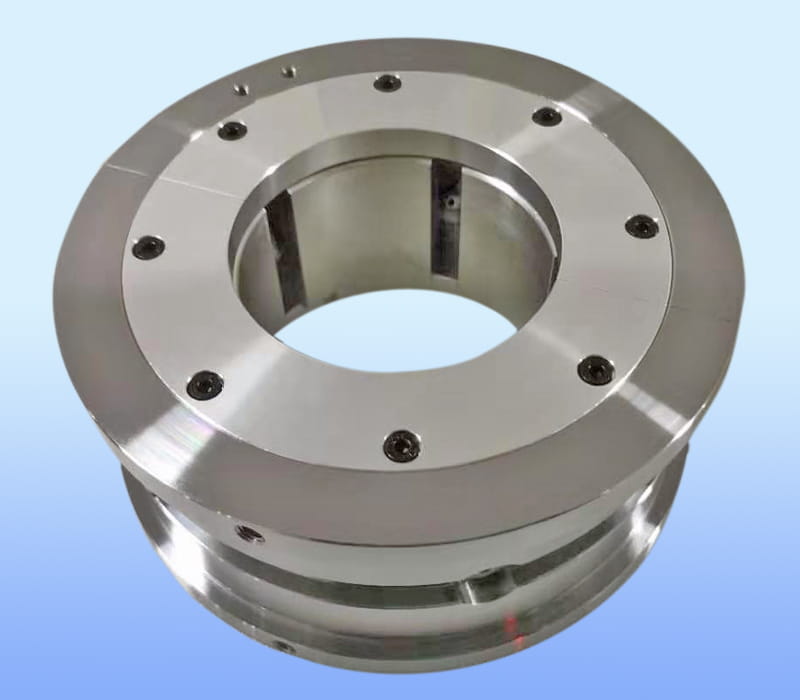
ZHEJIANG BHS JOURNAL BEARING CO.,LTD. located in FengXian District of ZheJiang, the company's brand "BHS", is a professional tilting pad thrust bearings manufacturers and Tilting pad bearings factory...

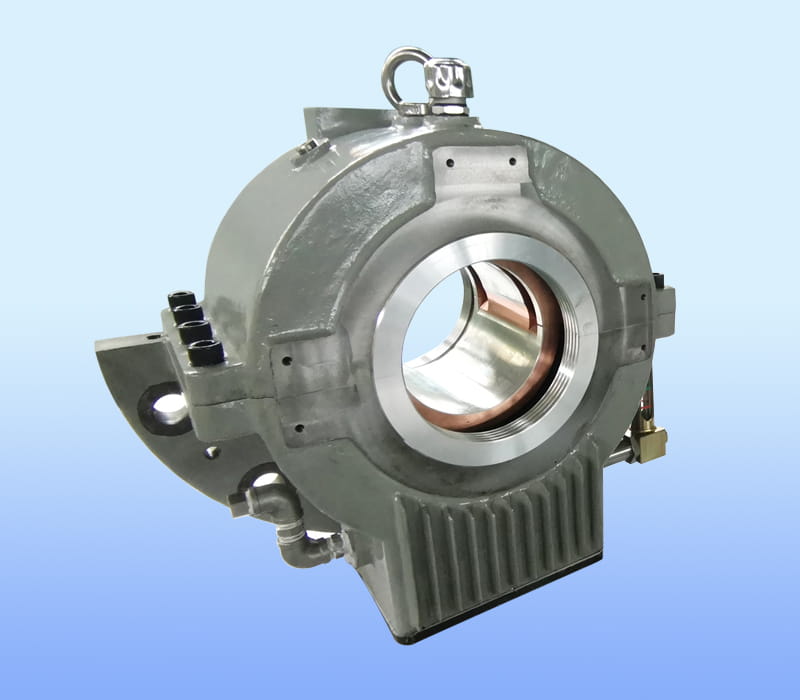
In cryogenic processing, natural gas liquids recovery, and energy recovery trains, the turboexpander is often the most demanding rotating machine in the plant. It operates at high speed, carries a relatively light rotor mass, and must remain stable through wide changes in flow, pressure ratio, and temperature. Those three traits, high speed, light load, and variable operating conditions, form a combination that ordinary hydrodynamic bearings handle poorly. A fixed-profile journal bearing may develop oil whirl and then oil whip, producing subsynchronous vibration that can grow until the rotor orbit becomes unstable. That is why expander tilting pad radial bearings are widely specified for this class of machinery.
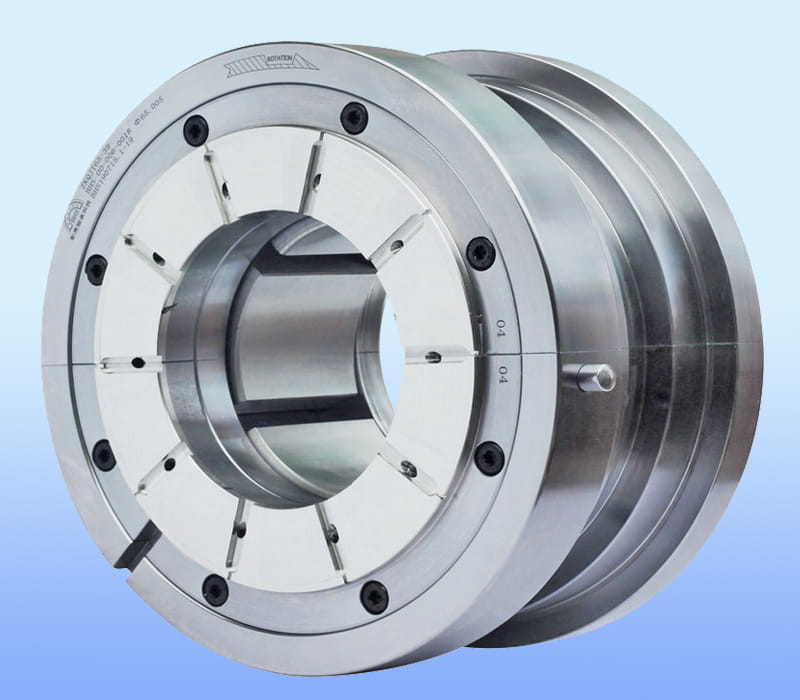
The tilting pad journal bearing for expander service is not simply a bearing that happens to be used on expanders. It is a bearing architecture chosen because its pads can move. Each pad pivots on a pivot point, allowing the pad to follow the rotor as speed and load change. The result is a hydrodynamic film that stays centered and a rotor that resists the destabilizing forces that build up at high surface speeds. In a turboexpander, the bearing must also tolerate rapid transients during startup, shutdown, and process upset. A pad that can tilt is far better equipped to survive those events than a rigid bore bearing.
Another reason expander duty is severe is the relationship between rotor diameter and speed. To keep surface velocity within reasonable limits, expander rotors are often small in diameter. A small journal running at high speed creates a thin oil film with high shear rates. If the bearing clearance is not carefully controlled, the film can become too hot or too thin, and the bearing may lose its load capacity. Tilting pad radial bearings address this by distributing load across multiple pads and by allowing each pad to establish its own oil wedge. The following sections explain the design variables that matter most when selecting these bearings for expander service.
The defining feature of a tilting pad journal bearing is that each pad is free to rotate about a pivot. As the rotor turns, the pad tilts until the converging gap between pad and journal generates a hydrodynamic pressure field. That pressure field supports the load. Because the pad can tilt, the oil wedge remains stable even when the load direction changes. In a fixed bearing, the wedge is set by the bore geometry, and any change in operating condition can shift the minimum film thickness to an unfavorable location.
Stability in high-speed expanders depends on suppressing subsynchronous vibration. Subsynchronous vibration occurs when the rotor whirls at a frequency below the running speed. A tilting pad bearing reduces this risk because the pads do not create the strong cross-coupling forces that a plain journal bearing does. Cross-coupling is the tendency of a bearing to push the rotor sideways when it is displaced in one direction. By interrupting the continuous oil film around the journal, the pad arrangement weakens that cross-coupling and raises the threshold at which instability begins.
Clearance and preload are the two most sensitive geometric variables in an expander tilting pad journal bearing. Clearance is the diametral gap between the journal and the pad surface. Preload is the amount by which the pad bore is smaller than the assembled clearance circle. A higher preload makes the bearing stiffer and can improve stability, but it also raises the oil film temperature and increases power loss. A lower preload reduces temperature but may allow the rotor orbit to become larger.
In expander service, the clearance window is narrow. Too much clearance and the bearing may run with a thick but poorly centered film, inviting whirl. Too little clearance and the film becomes starved of oil flow, causing rapid temperature rise. A common industry guideline is to set preload between 0.3 and 0.5 for high-speed expander bearings, but the final value must be checked against rotor dynamics, oil supply temperature, and load direction. The table below summarizes the practical effects.
| Parameter | Lower Value Effect | Higher Value Effect | Expander Consideration |
|---|---|---|---|
| Preload | Lower stiffness, lower temperature | Higher stiffness, higher temperature | Use enough preload to suppress subsynchronous vibration |
| Clearance | Higher oil flow, cooler film | Lower oil flow, hotter film | Keep within narrow window to avoid whirl or overheating |
| Pad thickness | More flexible pad | More rigid pad | Balance pad compliance with pivot stiffness |
Lubrication method has a direct effect on power loss and pad temperature in high-speed expanders. In flooded lubrication, the bearing housing is filled with oil and the pads run submerged. This approach provides abundant oil and good cooling, but it also creates churning losses because the rotor and pads must push through a large volume of oil. In directed lubrication, oil is sprayed or injected directly into the pad inlet. The oil supply is metered, so churning losses drop significantly and less heat is generated. Directed lubrication is often preferred for expander bearings where surface speed is high and every kilowatt of parasitic loss matters.
The choice is not always simple. Directed lubrication requires careful nozzle design and oil filtration, because a plugged orifice can starve a pad. Flooded lubrication is more forgiving but less efficient. Many expander installations use a hybrid approach: directed lubrication to the loaded pads and a controlled flooded supply to the unloaded side for cooling. The table below compares the two methods.
| Attribute | Flooded Lubrication | Directed Lubrication |
|---|---|---|
| Oil volume in housing | High | Low to moderate |
| Churning power loss | Higher | Lower |
| Pad temperature control | Good but uneven | Targeted and efficient |
| Risk of oil starvation | Low | Higher if nozzles clog |
| Typical expander use | Older or lower-speed units | High-speed, efficiency-focused units |
High rotational speed imposes a limit on journal surface velocity. If the surface speed is too high, the oil film shears violently, temperature climbs, and the bearing material may degrade. One way to control surface speed is to reduce journal diameter. However, a smaller journal reduces bearing load capacity, and it also makes clearance control more difficult in a conventional multi-piece tilting pad bearing. The pad-to-pad clearance variation can become a significant fraction of the total clearance, which hurts stability.
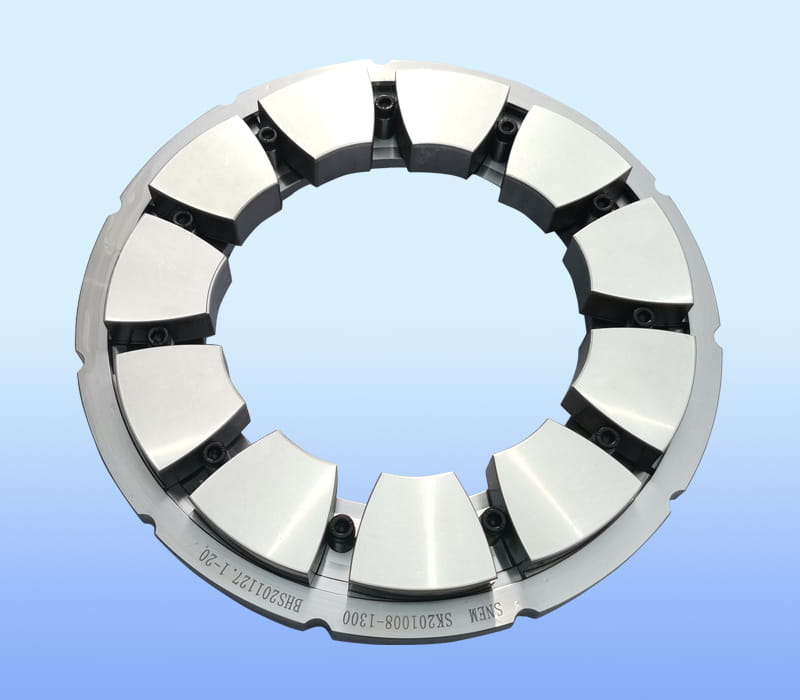
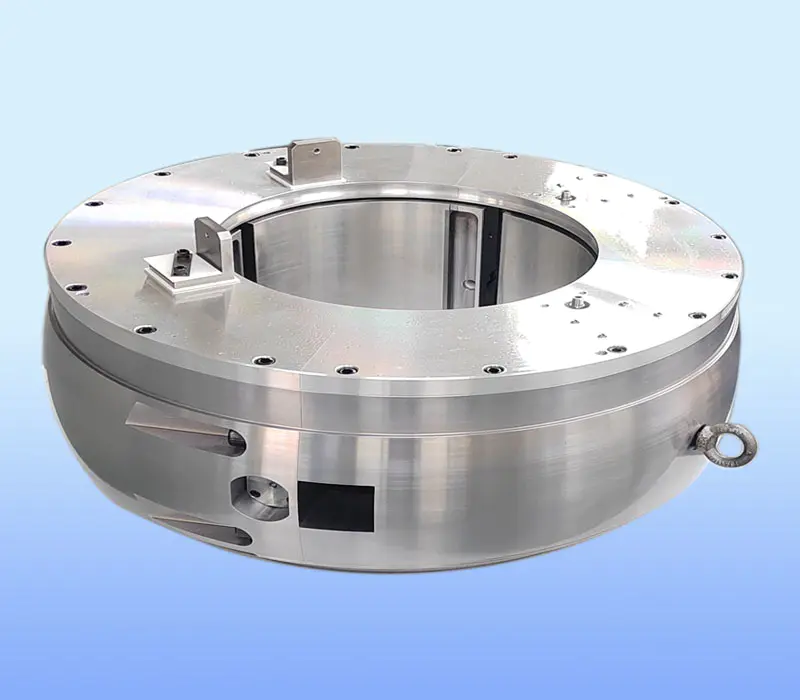
A wire EDM integral tilting pad bearing addresses this problem. Instead of assembling separate pads into a housing, the pads are cut from a single piece of bearing material using wire electrical discharge machining. The result is a one-piece structure with precise pad spacing and consistent clearance. The pads remain connected to the outer ring by thin webs that act as pivots. This design is especially useful for small-diameter, high-speed expander rotors because it maintains tight clearance control without the stack-up tolerances of a multi-piece assembly.
Selection note: When the product of journal diameter and running speed exceeds a practical surface velocity limit, evaluate an integral wire EDM tilting pad design before increasing clearance.
Expander load direction is not always fixed. During normal operation, the dominant load may come from rotor weight or from process forces. During transients, the load vector can rotate. A four-pad bearing with pads at 0, 90, 180, and 270 degrees has different stiffness in different directions. A five-pad bearing with a load-between-pad configuration often provides more uniform stiffness and better stability when the load direction is uncertain.
The choice between four and five pads also affects oil flow and temperature. More pads mean more oil inlets and more pad surfaces, which can increase drag but also improve cooling distribution. For expanders that see frequent load reversals or wide flow turndown, a five-pad arrangement is often the safer choice. For a well-defined load direction and a need to minimize power loss, a four-pad bearing may be sufficient.
Babbitt alloy remains the standard lining material for expander tilting pad radial bearings. It offers excellent embeddability and conformability, which helps the bearing tolerate small misalignments and debris. However, Babbitt has a limited temperature ceiling. Above roughly 120 degrees Celsius at the pad surface, its strength drops and the risk of wiping increases. In high-speed expanders, pad temperatures can approach that limit if lubrication is poor or clearance is too tight.
Cooling flow path design is therefore critical. Directed lubrication can deliver cool oil directly to the pad inlet. Some bearings also include cooling channels behind the pad to remove heat from the steel backing. The goal is to keep the Babbitt surface below its safe limit while maintaining a stable oil film. If the application requires higher temperatures, alternative lining materials may be considered, but they often trade away some conformability.
Expander bearing problems rarely appear without warning. Condition monitoring can detect the early signs, but interpreting them requires an understanding of how tilting pad bearings behave. The most common signals are listed below.
These signals do not identify a single root cause. A temperature rise could be caused by a clogged oil nozzle, a change in process conditions, or a worn pivot. A vibration peak could come from the bearing, the rotor, or a coupling. The correct response is to gather trend data, compare it to baseline, and involve a bearing specialist who can interpret the full picture. Attempting a repair without that analysis can make the problem worse.
Selecting a supplier for expander tilting pad radial bearings is not only a matter of price. The supplier must understand rotordynamics, oil film behavior, and the specific demands of high-speed expander service. A supplier who only catalogs standard bearings may not be able to match the clearance, preload, and lubrication details that your rotor requires.
When you request a quote, provide the following operating parameters. The more complete the data, the more accurate the selection.
Customization capability matters because expander bearings are rarely off-the-shelf items. The supplier should be able to adjust pad geometry, pivot design, and oil delivery to match your rotor dynamics. Delivery time and technical feedback speed are also important. A supplier who responds slowly during the selection phase will likely respond slowly during a plant outage.
Request a quote for expander tilting pad radial bearings. Submit your operating parameters and receive a selection recommendation with lead time and pricing. The more detail you provide, the faster the technical review can begin.
A plain journal bearing uses a fixed bore to generate the oil film. A tilting pad journal bearing uses separate pads that pivot to follow the rotor. This reduces cross-coupling forces and improves stability at high speed, which is why it is preferred for expanders.
Directed lubrication delivers oil only where it is needed, reducing churning losses and pad temperature. Flooded lubrication provides more oil but creates higher drag and power loss, which is undesirable in high-speed expander duty.
Higher preload increases bearing stiffness and can suppress subsynchronous vibration, but it also raises oil film temperature. Lower preload runs cooler but may allow larger rotor orbits. The correct value depends on rotor dynamics and load direction.
Consider it when journal diameter is small and speed is high, because clearance control becomes difficult in multi-piece assemblies. An integral design maintains precise pad spacing and consistent clearance without stack-up tolerances.
Include journal diameter, speed range, load magnitude and direction, lubrication method, oil supply conditions, clearance and preload targets, space limits, and monitoring requirements. This allows the supplier to perform an accurate selection.
Watch for pad temperature rise, subsynchronous vibration peaks, oil film pressure fluctuation, and changes in rotor orbit. These signals require trend analysis and specialist review before any repair is attempted.

ZHEJIANG BHS JOURNAL BEARING CO.,LTD. located in FengXian District of ZheJiang, the company's brand "BHS", is a professional tilting pad thrust bearings manufacturers and Tilting pad bearings factory...
Copyright © 2017 ZHEJIANG BHS JOURNAL BEARING CO.,LTD. All Right Reserved. China Tilting Pad Journal Bearings Manufacturers
