
 Tel:+86-575 -87957662
 Email:
 English
 中文简体
中文简体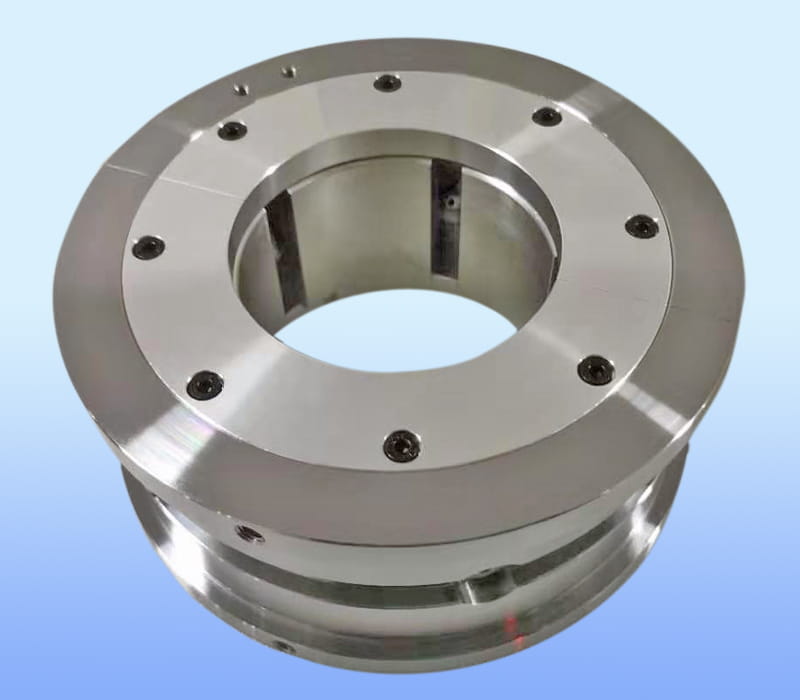
ZHEJIANG BHS JOURNAL BEARING CO.,LTD. located in FengXian District of ZheJiang, the company's brand "BHS", is a professional tilting pad thrust bearings manufacturers and Tilting pad bearings factory...

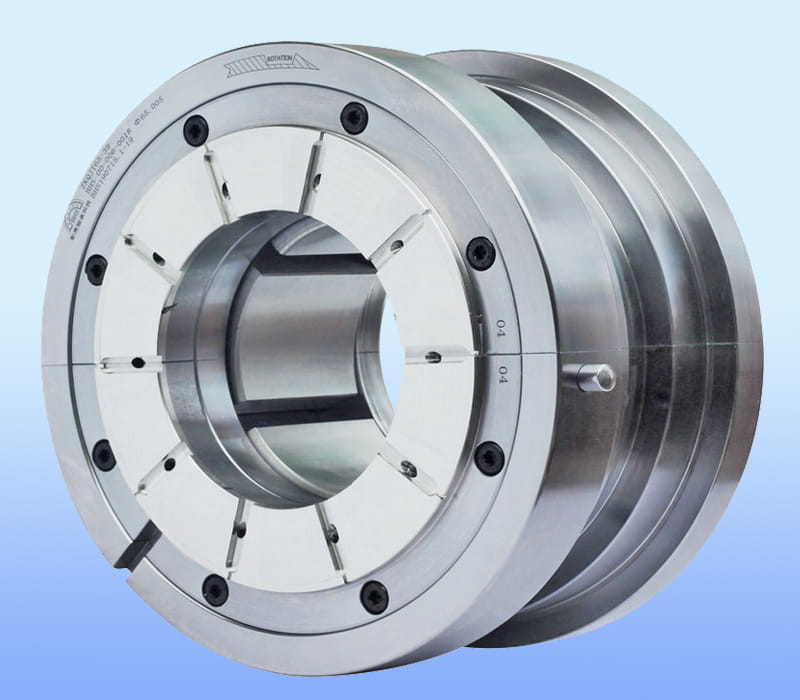
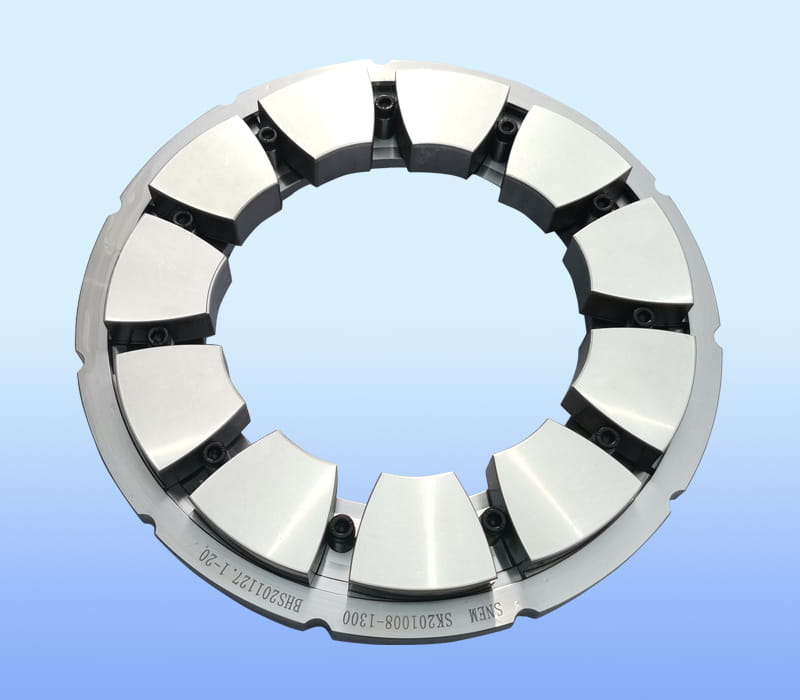
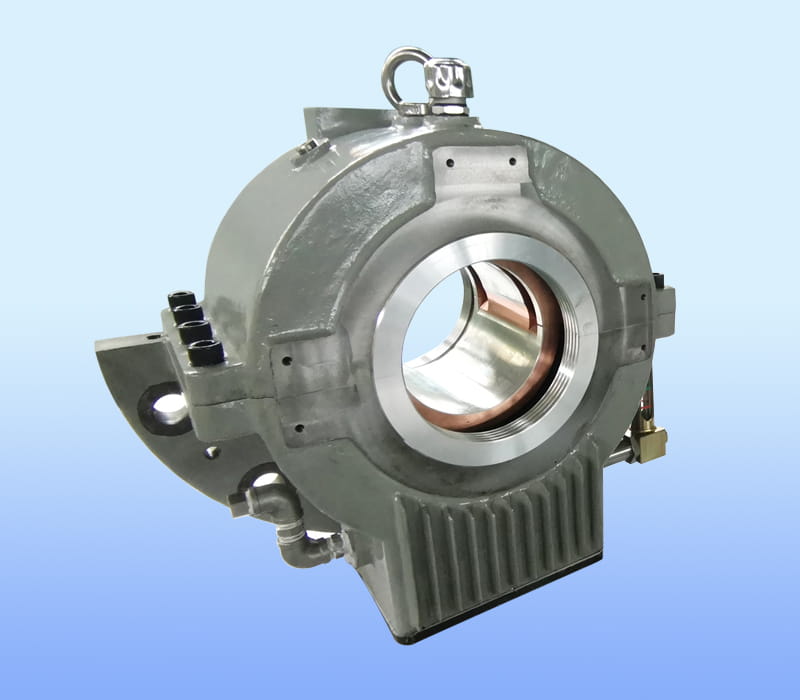
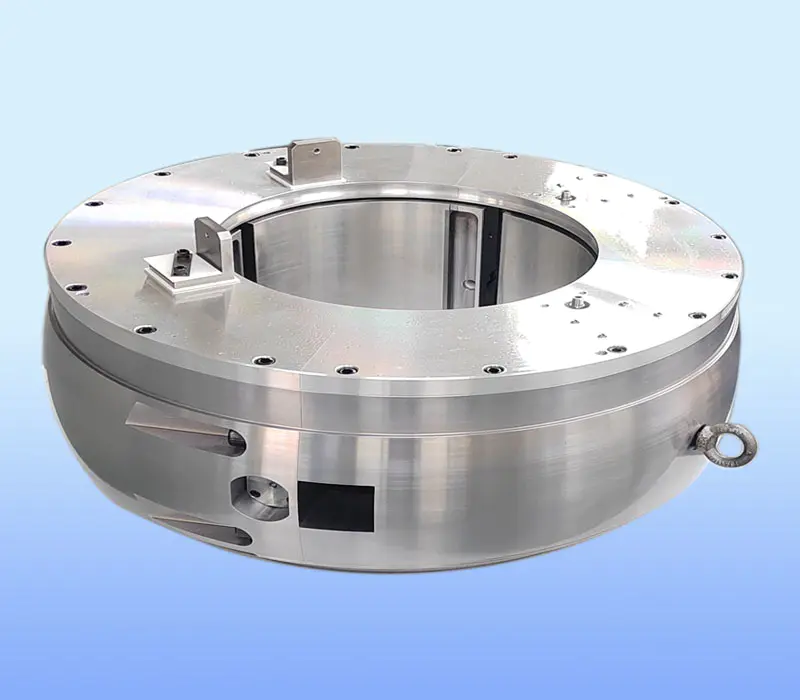
A compressor tilting pad journal bearing consists of multiple individual pads arranged around the journal (shaft) surface. Each pad is mounted on a pivot that allows it to tilt freely, creating a converging wedge geometry that generates hydrodynamic pressure as the shaft rotates. This pressure supports the shaft on a thin film of oil without metal-to-metal contact. The tilting action is critical — it allows each pad to adapt to changes in load, speed, and temperature, maintaining an optimal oil film thickness across a wide range of operating conditions. The number of pads typically ranges from four to six, with five-pad designs offering the best combination of load capacity and stability for most compressor applications. The pivot configuration — load between pads (LBP) or load on pad (LOP) — determines the bearing's dynamic response and is selected based on rotor analysis.
The configuration of pads and pivots significantly influences bearing performance. Load Between Pads (LBP) bearings position the load vector between two adjacent pads, providing higher damping and stability — the most common configuration for compressors. Load On Pad (LOP) bearings align the load with the pivot of a single pad, offering different stiffness and damping characteristics that may be preferred for specific rotor designs. The number of pads affects stability: four-pad bearings are suitable for moderate speeds, five-pad bearings provide the best all-around performance, and six-pad bearings offer maximum stability for very high-speed or highly loaded applications. Pad preload — the offset of the pad centre relative to the bearing centre — is another design parameter that influences oil film thickness and bearing stiffness.
The performance and reliability of compressor tilting pad journal bearings depend heavily on material selection and manufacturing precision. The bearing housing is typically machined from steel or cast iron, providing structural rigidity and dimensional stability. The pads themselves consist of a steel or bronze backing with a white metal (Babbitt) lining — the Babbitt layer provides the actual bearing surface, offering excellent embeddability and conformability to accommodate minor shaft misalignment. Advanced bearings may use polymer or composite pad materials for improved thermal performance or chemical resistance. Manufacturing requires precision grinding and boring to achieve tolerances measured in microns — pad bore roundness must be within 0.005 mm to ensure consistent oil film thickness. Surface finish of the Babbitt layer is typically Ra 0.4 micrometres or better.
Tilting pad journal bearings offer distinct advantages over fixed geometry bearings in compressor applications. The self-aligning pads eliminate oil whirl and oil whip — destabilizing phenomena that can cause severe vibration in fixed sleeve bearings at high speeds. The bearings provide high damping, reducing rotor vibration amplitudes and improving overall compressor reliability. They accommodate shaft misalignment and thermal growth better than fixed bearings, extending bearing life. The hydrodynamic oil film provides excellent load capacity with low friction — coefficient of friction typically ranges from 0.001 to 0.005. These bearings also support shaft speeds exceeding 100 m/s surface velocity, making them suitable for the highest-speed compressors used in oil and gas, petrochemical, and power generation applications.
Proper installation of compressor tilting pad journal bearings is essential for achieving design performance and reliability. The bearing housing must be precisely aligned with the shaft centreline — misalignment of even 0.05 mm can cause uneven pad loading and premature wear. Bearing clearance must be verified using plastigauge or direct measurement, typically 0.001–0.002 mm per mm of shaft diameter. Lubrication supply is critical — oil temperature and pressure must be maintained within specified limits to ensure adequate oil film formation. Start-up requires careful monitoring: the bearing must establish hydrodynamic lift before reaching full operating speed. Vibration monitoring using proximity probes provides real-time indication of bearing condition and rotor stability. Regular oil analysis detects bearing wear through particle count and spectrometric analysis.

ZHEJIANG BHS JOURNAL BEARING CO.,LTD. located in FengXian District of ZheJiang, the company's brand "BHS", is a professional tilting pad thrust bearings manufacturers and Tilting pad bearings factory...
Copyright © 2017 ZHEJIANG BHS JOURNAL BEARING CO.,LTD. All Right Reserved. China Tilting Pad Journal Bearings Manufacturers
